Chickens cluck when they are content. It is their baseline conversational sound, the vocal equivalent of a flock just going about its day. But clucking is only one small part of a surprisingly rich communication system. Chickens produce a range of vocalizations, and each one means something specific.
I have kept backyard chickens for years, and paying attention to what they are saying has made me a better keeper. Once you learn the sounds, you stop guessing and start knowing. Here is what the noise actually means.
Chickens are more vocal than most people expect. They communicate through a range of sounds, and each one carries a specific meaning. Tone and inflection matter too. The same basic sound, delivered with urgency, means something different from the same sound delivered calmly. Here is a breakdown of the most common vocalizations and what they signal.
Clucking — The everyday sound of a content flock. Soft, rhythmic clucking means your chickens are relaxed and socializing. Think of it as background conversation.
Squawking and screeching — Alarm sounds. Squawking usually means something startled them. Screeching is more serious and often signals an aerial threat, such as a hawk or a harrier. If you hear screeching, go check on your flock.
Bok, bok, bok — A softer, repetitive call, often accompanied by a tense, upright posture. Hens use this when calling to their chicks or when something has made them uneasy but not yet alarmed.
Cackling — The loud, proud announcement a hen makes right after laying an egg. Why she wants the whole world to know is genuinely unclear. Relief, pride, instinct — nobody knows for certain. Cackling also occurs between hens in confrontational situations, particularly around nesting box disputes.
Growling — A sound that surprises most new keepers. Chickens growl when they are in defense mode. Broody hens are especially prone to it. The first time I heard one of my broody hens growl, I genuinely thought she was sick. She was fine. She just did not want anyone near her nest.
Purring — A low, soft sound that means everything is calm. Similar to a cat’s purr in tone and function.
Chattering — Light, casual vocalization. You will hear this when you toss out scratch or when the flock is moving around pecking and exploring.
Wheezing, sneezing, or a raspy voice — These are not normal sounds and should not be ignored. They can indicate a respiratory infection that can spread quickly through a flock. Diagnose and treat as soon as possible.
Chirping (chicks only) — Baby chicks chirp constantly. Quiet, steady chirping means they are comfortable. Louder, more urgent chirping means they are hungry, thirsty, or cold. A sharp, high-pitched chirp usually signals distress.
Other Common Chicken Behaviors
It’s important that you really get to know your chickens’ behaviors. It will help you to monitor the overall health, well-being, and contentment of your chickens.
Also, the more contact you have with your chickens, the less stressful their lives will be. You want your flock to trust that you are not the enemy, but a friend that they can rely on. If you do this, you can count on your hens to deliver the goods (eggs) in a consistent manner.
Dust bathing is one of the more entertaining things a flock does, and it serves a real purpose. Chickens dig a shallow depression in dry dirt or sand, then flop around in it, working the dust through their feathers and down to the skin. It controls mites and lice, removes excess oils, and helps keep feathers in good condition. In summer, it also has a cooling effect.
If your chickens do not have access to a dry patch of ground, they will find one. I have had hens carve out a dust bath in my garden beds without asking permission. If you want to spare your garden, give them a designated spot with dry dirt or sand, and they will use it happily.
Pecking Behavior
Pecking serves several functions in a flock, and understanding them helps you tell normal behavior from a problem worth addressing.
The most well-known is establishing the pecking order, the social hierarchy every flock develops and maintains. This is completely natural and will happen regardless of what you do.
New birds introduced to an existing flock will trigger a round of it. So will the loss of a dominant hen. It settles down on its own in most cases.
Chickens also peck simply because that is how they interact with the world. They have no hands. Their beak is their primary tool for eating, exploring, and investigating anything that catches their attention. If it wiggles, they will peck it. If it does not wiggle, they will probably peck it anyway.
Where pecking becomes a genuine problem is when it turns on a wounded bird.
Chickens are drawn to the color red, and a wound will attract attention from the rest of the flock. What starts as curiosity can escalate quickly, and a bird that is not removed from the flock can be pecked to death.
This sounds harsh, but it happens. If you have a wounded hen, isolate her immediately and keep her separate until she is fully healed, then reintroduce her.
The best way to reduce problem pecking is to give your birds enough space. Overcrowding is the most common trigger.
Chickens that free range rarely develop serious pecking issues because they have room to establish distance and avoid confrontation. Keeping feeders and waterers well stocked also helps. Hungry, stressed birds peck more.
Roosting
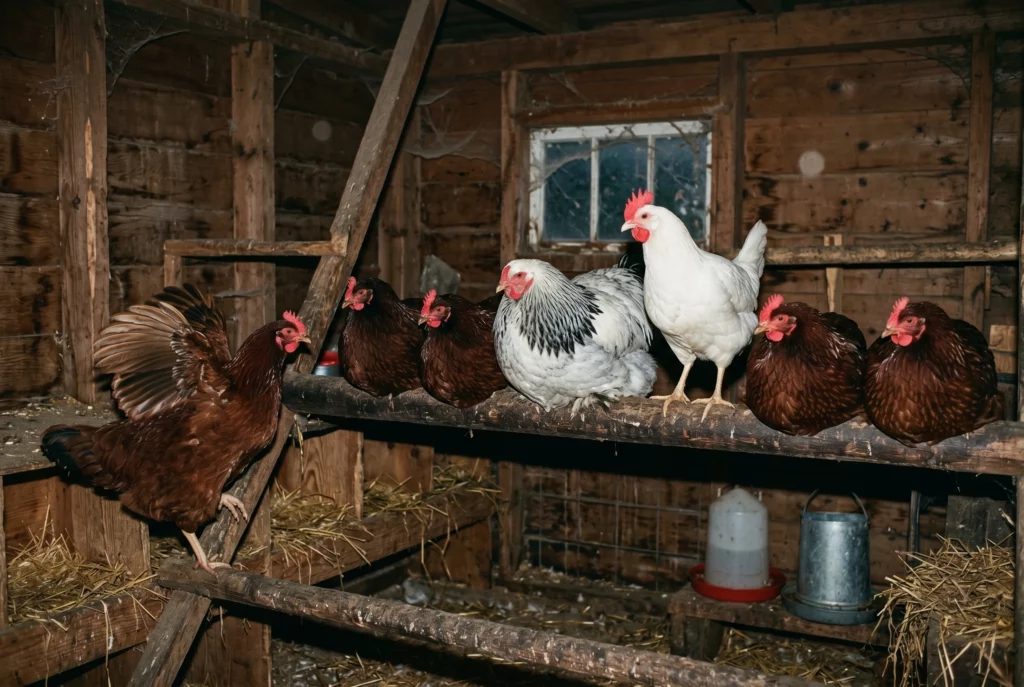
Roosting is an instinct that goes back to the origins of birds. Getting off the ground at night puts distance between a chicken and the predators that hunt in the dark.
Raccoons, weasels, mink, opossums, and foxes are all capable of taking a chicken that is sleeping on the ground. A bird on a roost bar several feet up is considerably harder to reach.
Chickens also have poor night vision. They lack sufficient rod cells in their eyes to see well in low light, which means once it gets dark, they are largely blind.
This is why they instinctively go to roost at dusk rather than wait until they feel tired. They know darkness is coming, and they get into position while they can still see.
One thing I have noticed with my own flock is that each bird claims the same spot on the roost bar every single night.
If you go out to the coop early enough in the morning, before they have moved around, you will see them in exactly the same order they were in when they settled down the night before. They do not shift positions during the night because they simply cannot see well enough to do it safely.
If you want to see how much their night vision limits them, add a heat lamp to the coop. Heat lamps throw out a significant amount of light, and the flock will move around and rearrange themselves all night once there is enough light to navigate by.
Preening
Preening looks like grooming, but it is more accurately described as maintenance. A chicken that preens regularly is healthy and comfortable. A chicken that has stopped preening is worth paying attention to.
The mechanics work like this. There is a small oil gland located at the base of a chicken’s tail, called the uropygial gland or preen gland. The chicken reaches back, collects a small amount of oil from it, and works that oil through its feathers with its beak. This coats the feathers with a water-resistant layer that helps shed rain and maintain insulation.
Preening also realigns feathers that have gotten bent or ruffled. Feathers are not just covering. They are functional structures that regulate body temperature and, in the case of a hen that needs to make a short escape, assist with flight. A well-preened bird maintains all of those functions properly.
You will often see chickens preening after a dust bath, which makes sense. The dust bath removes excess oil and debris, and further preening redistributes fresh oil and puts everything back in order. The two behaviors work together.
In Closing
Chickens are more communicative and more socially complex than most people give them credit for. Once you start paying attention to what they are doing and why, you stop seeing a flock and start seeing individuals with habits, preferences, and relationships. That shift makes you a better keeper, and it makes the whole experience considerably more interesting.
If you have a question about something your chickens are doing that is not covered here, leave it in the comments below. There is a good chance someone else is wondering the same thing.












Leave A Comment