
Reading Time: 4 minutes
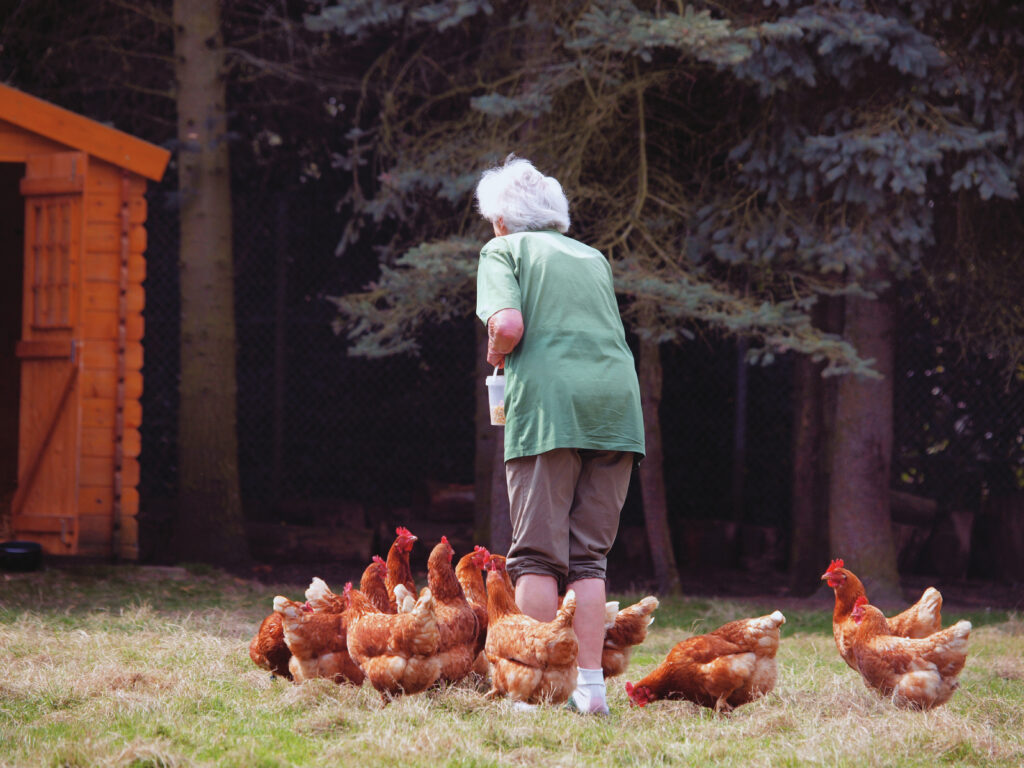
Therapy chickens in nursing homes are soul-soothing for old and young alike.
The famous nurse Florence Nightingale first wrote about pet therapy in 1859. She noticed patients with chronic illness felt better when they had an animal by their side. Since then, endless studies have confirmed that animal-assisted therapy has a measurable positive effect, relieving stress, reducing anxiety, and providing comfort, both for those with and without clinical conditions.
In the world of therapy animals, most people are familiar with dogs, goats, cats, llamas, and even horses. But there’s a new contender in providing benefits for the sick or elderly: therapy chickens.
Anyone who’s spent time with their backyard flock knows that watching and interacting with chickens can be calming and reduce stress. It’s a natural leap to conclude that chickens would make suitable therapy animals.
Therapy Chicken Certification
Most organizations that certify therapy animals are reluctant to consider birds — especially chickens — because, while there are exceptions, mammals have a certain trainability that birds may lack.
In fact, for liability and insurance purposes, officially certifying chickens as therapy animals is difficult because the species lacks a substantial body of research indicating that chickens can be successful as therapy animals. “Domesticated farm animals, including chickens, aren’t currently eligible for registration as therapy animals,” says Jesse Haas, national director of programs with Pet Partners, the nation’s oldest and most trusted organization for pet therapy standards. “Without research to document their behavior over time, we can’t evaluate their predictability and reaction to stress.”
That research is necessary to document the species’ behavior over time in various demanding environments. Often, according to Intermountain Therapy Animals, what’s lacking is a licensed evaluator familiar enough with chickens to assess whether they’re truly enjoying their interactions with humans.
Unofficial Therapy Chickens
However, unofficial therapy programs are a different matter, as many enterprising people are discovering. Individual facilities (nursing homes, rehabilitation centers, etc.) may be wide open to the idea of chickens as therapy animals.
In the case of Healing Hens of Texas, the founder started bringing chickens — specifically Silkies — into senior residential facilities. At first, the hens were mere visitors. Now they have permanent placements at several facilities, allowing residents the opportunity to visit the birds whenever they like. One facility manager termed the chickens “heart medicine” and therapeutic for patients’ minds.
The presence of poultry is particularly effective for those suffering from anxiety and depression associated with dementia.
Therapy Chickens and Senior Homes
In Australia, an organization that runs nearly 20 senior care homes began exploring alternative means to improve residents’ quality of life. At one facility, a pilot program involving chickens was so successful that the organization is implementing “chooks” (as they call chickens) at the rest of the homes. The presence of poultry is particularly effective for those suffering from anxiety and depression associated with dementia.
In some senior care facilities, special chicken enclosures are built with wheelchair-accessible entrances so residents can sit among the chickens and soak in their activities. If their mobility permits, residents can gather eggs and assist with the chickens’ daily care. Therapy chickens are proving especially helpful for seniors because so many older people grew up on farms.
Why and How do Chickens Help?
The scientific reasons why animal therapy leads to such positive effects are still being investigated. Animal therapy stimulates the body’s endorphins (the “feel-good” hormones) and reduces the level of stress hormones such as cortisol, norepinephrine, and epinephrine. Being around animals provides an oxytocin rush, which in turn drives down stress physiology. When patients aren’t stressed, they deal with pain better. Animal therapy can take the form of offering a distraction from chronic symptoms or a place to practice social interactions.
Additionally, unconditional, non-judgmental animals can provide people with a safe space to process emotions or try new tasks. Oddly, psychologists have found that while people are more likely to talk to therapy animals, they’re also more likely to talk with each other in the presence of animals. In the case of on-site chicken coops, therapy hens allow patients to get outside more, which also has a beneficial effect.

Beyond Senior Homes
Chickens assist more than just the elderly. Prisoners, those with disabilities, people overcoming abuse, those with mental health challenges, and people with many other stressful or disabling conditions can benefit from interactions with chickens. In some programs, people who’ve been abused are paired with chickens that have also been abused. This offers tremendous benefits for both species as the healing hens help heal the humans.
Some organizations provide calm, docile birds to in-home patients, including children with special needs and seniors. They help combat social isolation and loneliness in older people, and reportedly decrease symptoms of anxiety and depression, particularly for patients with dementia.
What Does It Take to be a Therapy Chicken?
As with any therapy animal, therapy chickens must be calm, unruffled, sweet-tempered, and docile. Certain breeds (such as Silkies, Orpingtons, and Cochins) have a better disposition for this purpose, though individual birds from any breed are suitable if they show exceptional gentleness. For obvious reasons, roosters generally aren’t considered as candidates.
Any therapy animal must be properly raised and handled. Getting the birds used to the trainer is one thing, but getting them used to other people, as well as varying circumstances, can be trickier. Can a chicken be calm around other animals (dogs, cats), sudden movements, or small children? Does it get spooked by loud noises? A therapy animal that acts out under stressful conditions isn’t just annoying or dangerous; it can be a legal liability.
Therapy in Its Many Forms
Despite the myriad benefits, chickens don’t offer actual “therapy.” Instead, mingling with, caring for, or engaging in activities with chickens are considered “animal-assisted interventions.”
According to US Service Animals, “The laws surrounding chicken therapy are complicated, and there are local laws and federal regulations to consider. Federal law describes a service animal as one that can be trained individually to perform tasks for someone with a disability. Chickens can’t be classed as service animals but can still be a therapy pet or Emotional Support Animal (ESA) if they assist with a defined need. Therapy fowl can be registered as an ESA.”
Whether officially or unofficially, there’s no question that chickens are being used more frequently in rehabilitative settings. All you have to do is take a chair and sit among your own backyard poultry — watching them cluck, scratch, take dust baths, or even sit in your lap — to understand why.
Originally published in the June/July 2026 issue of Backyard Poultry and regularly vetted for accuracy.
…
https://backyardpoultry.iamcountryside.com/chickens-101/therapy-chickens-nursing-homes-zm0z26jjzols/
backyardpoultry.iamcountryside.com
Feed Name : Backyard Poultry
Chickens 101,animal therapy,Chicken therapy,hen therapy
hashtags : #Therapy #Chickens #Nursing #Homes










Leave A Comment