
Reading Time: 4 minutes
Across the countryside of Poland many years ago, a landrace variety of chicken known as Zielononozka Kuropatwiana, or Green-legged Partridge, was found on many farms. Named for their unique olive-green shanks, this breed is estimated to have once comprised more than 10 percent of all chickens raised in Poland. A once-common landrace fowl, the Green-legged Partridge developed its own treasure trove of genetic material through natural selection and breeding. The fowl were known to be hardy, independent, and able to forage for most of their own food. They were highly valued not only for their egg-laying ability (reportedly 150 to 180 eggs per year) but also for their high-quality meat production.
Ironically, the breed’s independence and ability to survive without intensive human intervention, traits once considered valuable and necessary, were also the factors that led to the birds falling out of favor. During the middle of the 20th century, a heavy emphasis was put on intensive management of poultry and livestock in enclosed housing systems. The Polish Green-legged Partridge seemed to resist all attempts at intensive domestication. They often became nervous in such systems, resorting to feather-picking and cannibalism. For these reasons, many farms stopped raising them altogether, and by the early 1970s, the breed’s numbers had dropped to near extinction.
What do they look like?
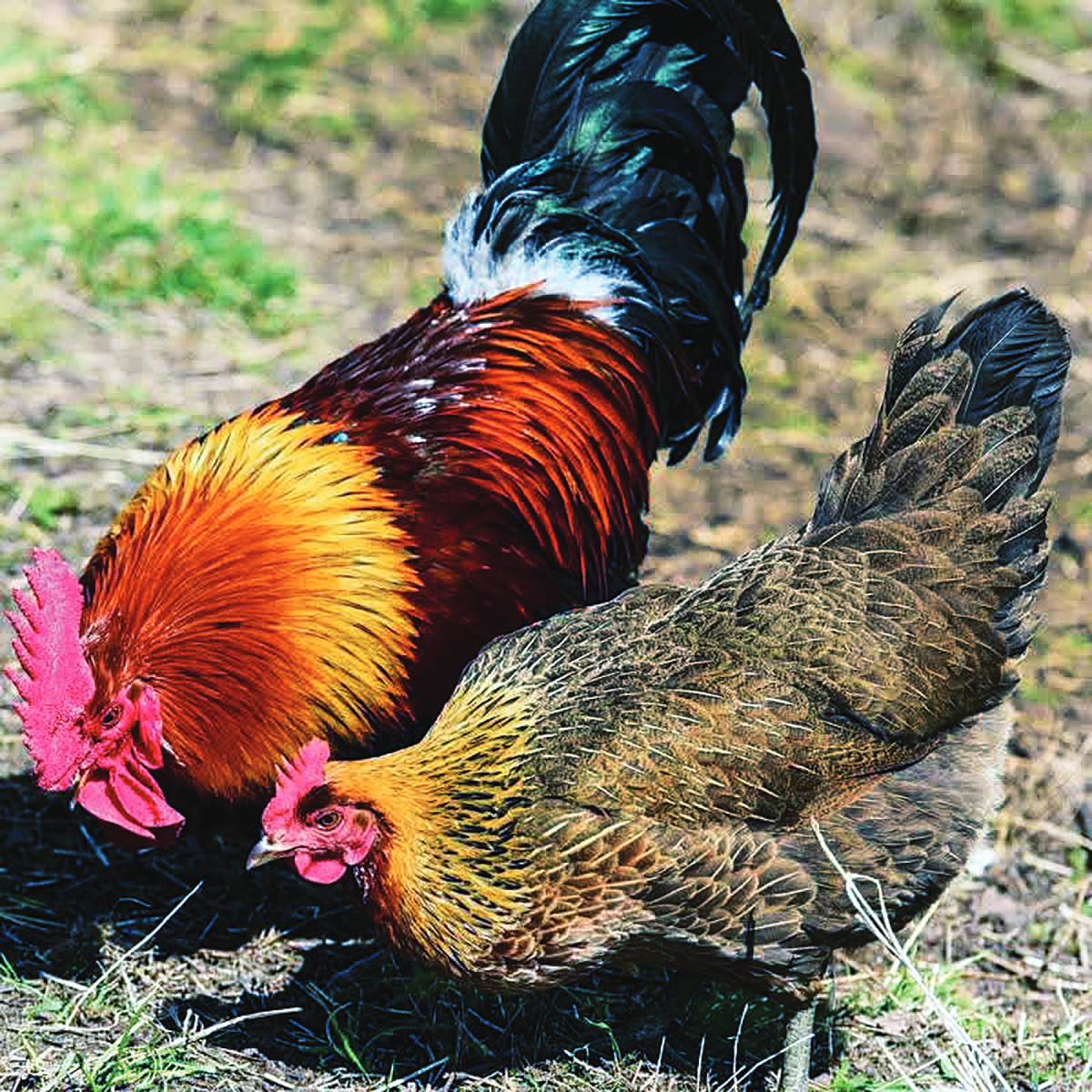
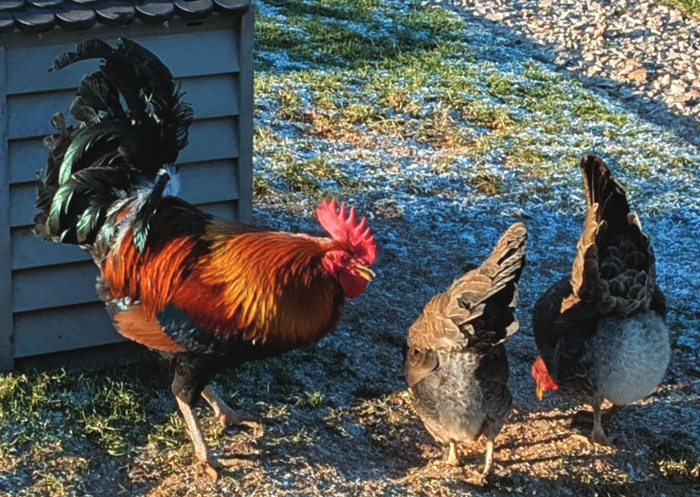
Poultry geneticist F.B. Hutt, referred to them as Polish Greenlegs in his 1949 book, Genetics of the Fowl. When many people hear the word “Polish,” they automatically envision a chicken with a large crest or pom-pom on the head. Polish Green-legged Partridge chickens aren’t part of the Polish breed, however, and don’t resemble them. They more closely resemble a Welsumer in looks, body conformation, and color, albeit smaller. Females weigh 3.9 to 5 pounds, while males will tip the scales at about 4.8 to 6 pounds. Hens are a golden-tan in color, with the black-penciled pattern, known as “partridge,” on the edges of the feathers. Roosters exhibit beautiful shades of red and gold, black, and often iridescent shades of blue. Both males and females have body conformations that might best be described as perfect examples of the quintessential “farmyard fowl,” looking much like chickens in the farmyard paintings by the old European masters.
Once common throughout Poland, these now critically endangered
landrace fowl are being brought back from the brink of extinction
by a handful of breeders.
What’s their history?
It’s often hard to pinpoint how long some landraces have existed in their regions of origin. In many cases, the history of the breeds may trace back hundreds of years. Such ambiguity seems to be the case with the Green-legged Partridge. They were once widely distributed across Poland’s farmland, and although they were domesticated, they seemed to have evolved and survived with minimal human intervention.
During the last quarter of the 19th century, Bronislaw Obfidowicz (1862-1919), a Polish physician and surgeon who also had a deep interest in animal breeding, wrote an article about the fowl for an agricultural magazine, Howdoca Drobiu (Poultry Farming). Some contemporary historians say the article was first published in 1879 (Obfidowicz would’ve been 17 years old), while others say it was published in 1899. In any event, it seems to be the first time that a comprehensive description of the fowl was given in any publication. The article was written in support of the Imperial-Royal Agriculture Society of Krakow’s efforts to identify and catalog uniform types of domestic poultry across the country.
There’s a record of Green-legged Partridges being shown at the General Provincial Exhibition in Lviv, Ukraine, in 1894. Later, in 1921, a breed standard was drawn up by Maurycy Trybulski, a Polish academic and animal breeder. This standard was officially recognized in 1923. It’s estimated that these birds were once raised on 70 percent of farms in Poland. By the early to mid-1970s, the birds had declined to such low levels that they were at risk of becoming extinct. The Polish government recognized the potential loss and began breeding programs to revive and save the breed. Today, two separate breeding flocks are kept by government universities in the country and are part of the breed preservation program. The breed has been designated as one of Poland’s national breeds.
What’s their current status?
Even with breed preservation programs in place, finding poultry keepers who actively keep and breed the fowl is a challenge. An exhaustive search for breeders and keepers of these birds in North America yielded no results. Numerous attempts to contact breeders and institutions in Poland went unanswered. I finally made headway by contacting the Rare Poultry Society of Great Britain. Mathew Roynon, the organization’s secretary, was extremely helpful. He introduced me to a poultry keeper in North Yorkshire, England, Carol Oversby. Carol raises several breeds of chickens, as well as geese, on her four-hectare smallholding. She has raised Green-legged Partridge chickens since 2015, when she hatched her first brood from eggs acquired from another British poultry breeder, Amanda McCallion. Sadly, Amanda passed away last year, further reducing the very limited number of dedicated breeders who raise these fowl in the United Kingdom.
Carol described Green-legged Partridge chickens as “Not flighty, very hardy, and excellent layers of large white to off-white eggs.” The birds are independent, excellent foragers, and enjoy running free. However, their independence doesn’t mean feral. According to Carol, Green-legged Partridge females will return to the coop during the day to lay and at night to sleep. As long as they can run free during the day, they’re happy.
Unfortunately, most poultry in England must currently be contained, by law, in enclosed housing, due to a recurrence of bird flu. According to Carol, Green-legged Partridge chickens become nervous and discontented while enclosed, and egg production declines. Although calm and docile when free-ranging, the roosters often become aggressive when confined.
While still very rare, the Green-legged Partridge is a breed that has much to offer homesteaders looking for hardy, dependable, and self-sufficient fowl. Hopefully, this interesting and unique breed will become available to poultry keepers in North America in the near future.
Doug Ottinger lives, works, and writes from his small hobby farm in northwest Minnesota. His educational background is in agriculture with an emphasis in poultry and avian science.
Originally published in the June/July 2026 issue of Backyard Poultry and regularly vetted for accuracy.
…
https://backyardpoultry.iamcountryside.com/chickens-101/polish-green-legged-partridge-chicken-zm0z26jjzols/
backyardpoultry.iamcountryside.com
Feed Name : Backyard Poultry
Chickens 101,Breed Profile,free range,green legged,Partridge,polish chicken
hashtags : #Polish #GreenLegged #Partridge #Chicken #Backyard #Poultry










Leave A Comment