
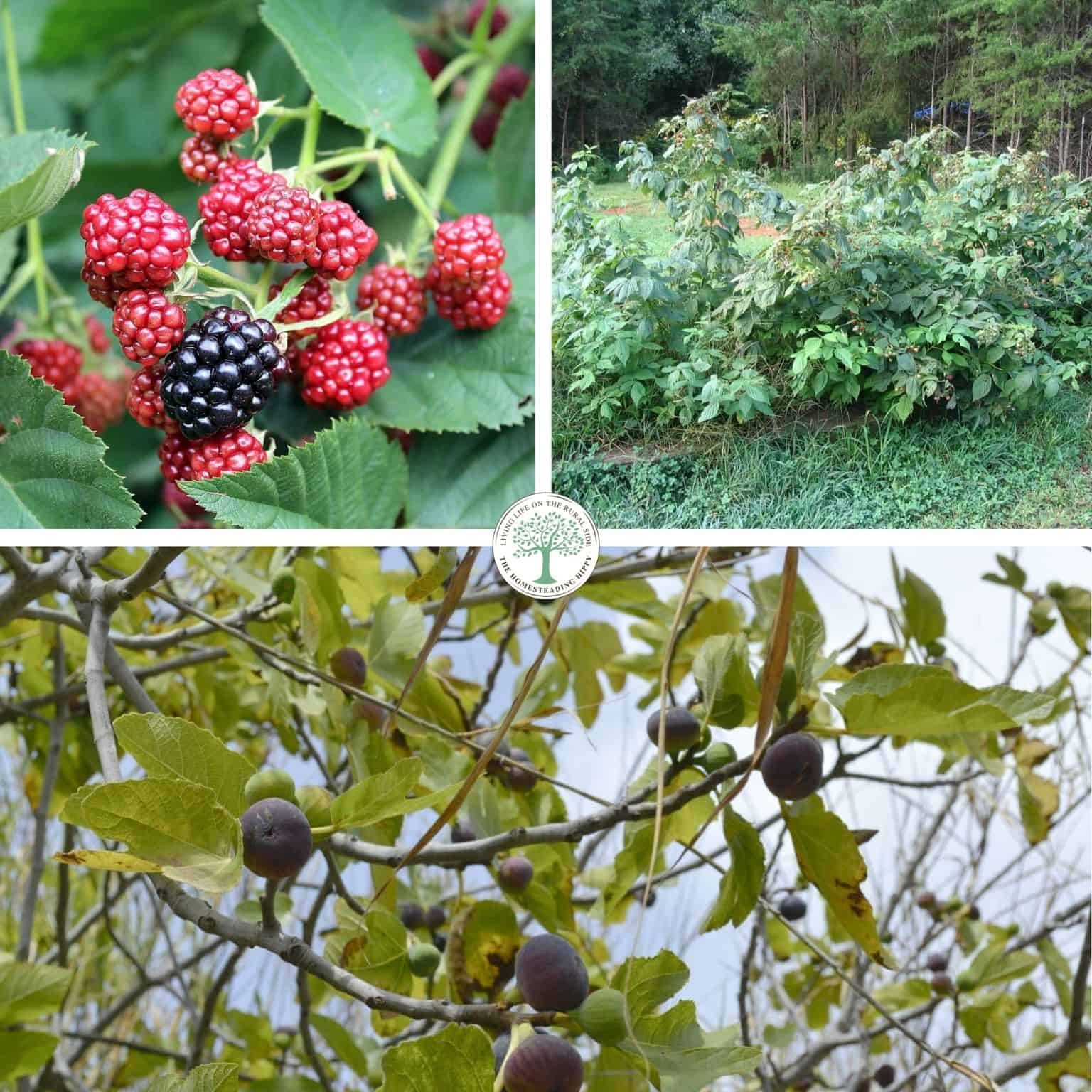
If you were hankering to grow fruit in your garden or elsewhere on your property, but your patch isn’t particularly sunny, don’t give up hope just because you fear struggling with the shade. Although most fruits do best and produce the best harvests with abundant sunshine, there are many that grow just fine in partial shade.

I’m going to tell you about such fruits in this article. Whether you want to can, preserve, make jams and desserts, or just eat them out of hand, you are bound to find at least a handful of your favorites on the list below. Grab your gardening gear, and we will get right into it. And if you’re looking for some vegetables that like the shade, go here.
Berries and Berry-Alikes
Elderberries
Another one of my most favorite fruits, and my very favorite berries, this North American native shouldn’t be eaten out of hand because the berries are poisonous until they are processed and cooked. But once they are, elderberry jam is one of life’s great pleasures.
These hardy plants will still be quite vigorous in partial shade as long as the soil is rich. Fertilize prior to planting and during growth for best results.
Blackberries
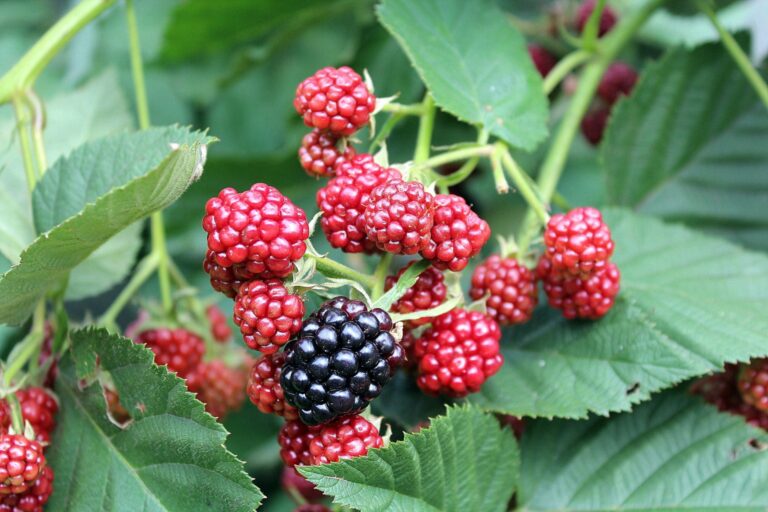
You’ll see lots of berries on this list, and we’re starting with one of my favorites. Most gardeners know that blackberries need lots of sun in order to produce big, abundant fruits, but most don’t know they will still supply you with plenty of slightly smaller berries even in a shady spot.
The trick to maximizing shady production is to take excellent care of the plant. Thin off any puny or dead parts so the plant will maximize resources toward the fruiting parts.
Thimbleberries
Here’s another wild berry that isn’t, as a rule, cultivated for commercial sale. Endemic in the northwestern part of the United States all the way up to Alaska, thimbleberries look a little bit like a raspberry that’s been flattened out into the shape of a mushroom cap.
Flipped upside down, they look much like their namesake. Juicy, tart and tasty, they are very fragile and can be tricky to harvest, but they are worth it.
Currants
Dense, sweet and tart, currants are one of my very favorite fruits for processing into preserves and using in baked dishes in place of raisins. They do exceptionally well in full sun, but are surprisingly tolerant of shade generally.
You can maximize your harvest of currants by planting multiple varieties close together so they can cross-pollinate.
Salmonberries
If your soil stays chronically wet, salmonberries are probably the right berry for you. Tart and sweet with a unique flavor, these are great for permaculture gardens or any shady spot.
Unlike most of the other fruits on this list, this is the one that needs partial shade at a minimum! Intense sunlight will dry them out and kill them. These things are really juicy and perfect for eating out of hand, so give them a try.
Lowbush Blueberries
Everyone loves blueberries, and even if your garden doesn’t get quite as much sun as you’d like, you can still enjoy clusters of these singularly delicious fruits. Lowbush variety blueberries are native to forest habitats, and so naturally they have to tolerate plenty of shade from a forest canopy.
Expect them to do great wherever you plant them as long as you can manage soil acidity, which is their Achilles heel. Aim for a soil pH of 5.0, and monitor regularly throughout the growing season.
Nannyberries
One of the most singularly unique berries on our list is one that most people have never tried and never seen in grocery stores. This wild berry is a prolific grower that requires little care other than aggressive management to keep it from spreading out of control. Most people describe the flavor as tropical. I don’t think they taste like anything else, but they do taste good!
Raspberries
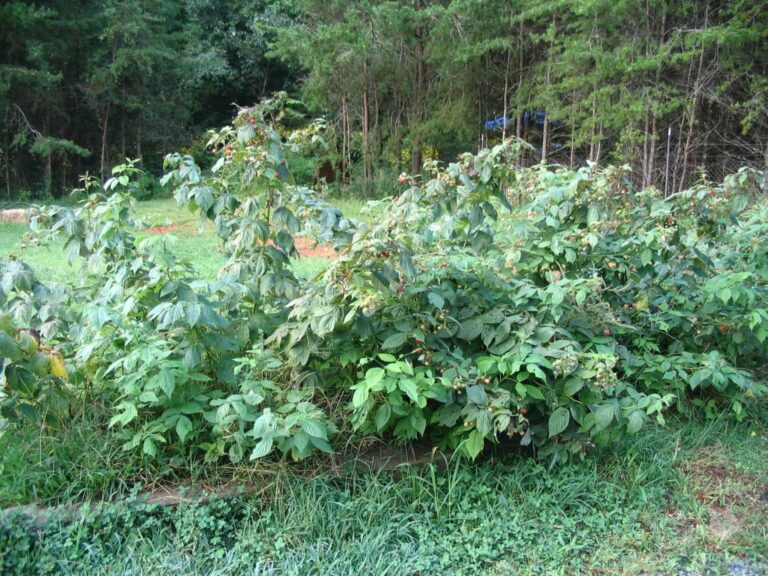
Like so many of the berries we have already talked about, you’re always best giving raspberries as much sun as they can get if you want the biggest harvest and the sweetest fruits. That said, most cultivars tolerate partial shade quite well so long as you do regular pruning back of dead, dying and unproductive runners.
Teaberries
These tiny red berries have a slight minty or menthol flavor that makes them totally unique and an interesting addition to your usual berry dishes. They tolerate partial shade well as long as they’ve got acidic, well-drained soil. Make sure these get plenty of water throughout the growing season, or they won’t fruit well!
Gooseberries
A gorgeous shrub sometimes used for landscaping, most folks have never had one of these tasty, interesting berries. The berries look like oversized, striated grapes, a bit like a transparent miniature watermelon, with a sweet and tart flavor.
Make sure your shrubs get excellent airflow for good growth and fruiting; prune as needed to prevent them from turning into a thicket if planted close together.
Mountain Strawberries
Another particular variety of a common fruit that you’ve certainly never had, mountain strawberries are, as you’d think, a type that typically grows in high elevations. Cooler, dry weather with less daylight is a recipe for success if you want to grow your own. Note that these strawberries are continual producers, meaning you’ll need to harvest sporadically throughout the growing season, typically late summer through early fall.
Wild Strawberries
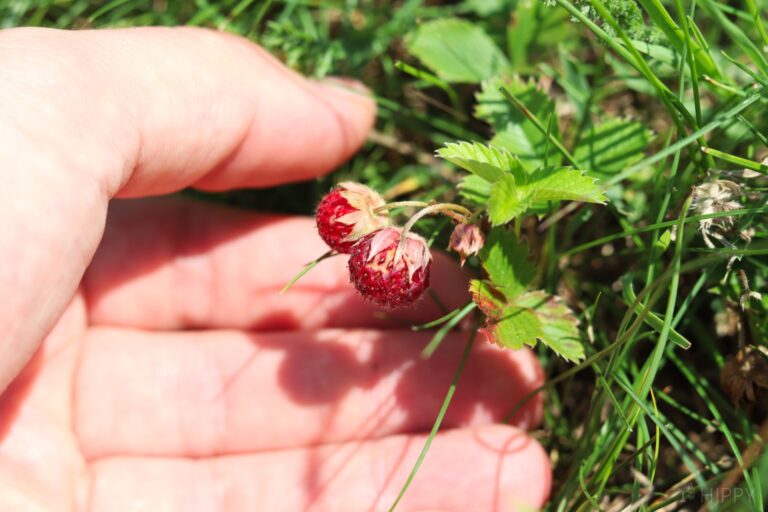
These actually tolerate shade really well, and have a different flavor from regular strawberries. And, like most other berries, they yield the most fruit when they get more son, not less. Even so, they can grow a decent amount in partial shade.
Lingonberries
Another fruit that most folks have never tried, and another plant on our list that’s better known for its ornamental qualities thanks to its bright green, waxy leaves and pretty little pale pink flowers.
These evergreen berries grow well in cool weather and most shady locations, spreading by underground runners. Make sure you manage those if you want to keep them in place and prevent them from infiltrating nearby landscaping or other parts of your garden.
Serviceberries
I swear I’m not making this one up. And yes, it is an actual berry. You might know them as Juneberries or saskatoons depending on where you live. Thriving in colder regions, these are one of the best options if you live in the Northern US and are very tolerant of partial shade and subpar soil conditions.
Mulberries
This US native is a perennial favorite of birds and other foraging creatures, but they are just as good processed into jam or baked into pie or cobbler.
Mulberry trees do well in full sun as expected, but they are surprisingly capable even in shady spots. Keep in mind that a mulberry tree can be a big commitment if you aren’t investing in a dwarf variety; they get big, and pretty fast!
Tree Fruits and Stone Fruits
Pawpaw
A soft fruit with a mashable and mild pulp that is tropical, almost banana-like in flavor, pawpaw trees naturally grow under the canopy of other, taller trees, and so they can put up with plenty of shade.

Peaches
Most folks wouldn’t believe that this summer superstar could deal with anything less than full sun, but it’s possible for peaches to get a few hours of shade per day and still turn out wonderfully sweet fruit. Make your life easy by choosing a variety that will grow based on your space allowance.
Quince
Quince used to be a delicacy in the early years of America, but it has since been relegated to the dustbin of history by most people. That’s a shame, because this is another unique fruit that deserves a spot in your kitchen. Like elderberries, though, these must be cooked and processed to be eaten; they are too hard and astringent otherwise. You’ll find that these trees are very hardy and can grow well in many different environments.
Barbados Cherries
Barbados cherries are a unique variety, being a type that craves warm weather but still tolerates partial shade very ably. Nominally growing into a huge tree, they can also be trimmed into compact shrubs and still produce lots of sweet, red fruit.
Something else that might help you is that this variety works quite well in large containers, so if you battle cold springs and short summers where you live, put these near the top of your list if you’re a cherry fan.
Loquats
An extremely popular fruit throughout much of Eastern and Southeastern Asia, loquats are stone fruits that can do well with as little as 4 hours of sunlight a day. If you’re ready to shake things up in the kitchen, you’ve got to give these a try in cobblers, pies, turnovers and other desserts.
Apples (Cooking varieties)
I know this is bound to surprise plenty of you! Probably the very last fruit you’d expect to see on a list of shade-tolerant fruits, chosen carefully, there are many cooking apple cultivars that can produce well, even thrive, in partial shade (Granny Smith, Discovery, James Grieve).
Japanese Plums
A smaller plum tree known for early blooming and highly fragrant flowers, Japanese plums are sweet and abundant given even a little bit of care. Full sun is best, but in my experience, partial shade will barely slow them down. Expect 24 to 36 months of growth before they are ready to fruit for the first time.
Pomegranates
Another exotic fruit on our list, and one that’s infamously difficult to eat, pomegranates are highly nutritious and the trees themselves are truly beautiful. This is a great choice for a pollinator-friendly plant because the blooms are attractive to many insects and hummingbirds. They do best in full sun, but they’ll tolerate partial shade — just expect a smaller harvest for the trade-off.
Sour Cherries
One of the most popular ornamental cherry varieties, thanks to their showy springtime flowers, is also one of the best picks for a shady spot. They’re also one of the most versatile, culinarily: although quite tart, they’re delicious out of hand or processed into jams and pie fillings.
Like most berries we will talk about on our list, the key to getting good performance in the shade is staying on top of pruning, watering and other health factors.
Pears
One of the few large fruit trees that can do really well in colder climates, you’ll want to get pear trees plenty of sun if you can, but know that they can tolerate partial shade. As long as you’ve got good afternoon sunlight most days, you can find a pear variety that should grow well on your property.
Chokecherries
Chokecherries aren’t true cherries at all; same genus but different subgenus. These are so astringent they can make you sick if you eat too many out of hand, but processed into jam or filling with plenty of sugar, they have a wonderful flavor. These are particularly hardy plants that will tolerate a fair bit of shade as long as they are planted in sandy, loamy ground.

Figs
Fig trees, specifically varieties that produce smaller fruits, are one of the best shady-growth plants you can pick, as they will still grow aggressively and vigorously given just a little bit of care. Prune as needed for best results, but be conservative: most fig cultivars will naturally die back somewhat in the wintertime, so anticipate that before you snip.
Vine Fruits
Muscadines
Muscadine vines grow perfectly in hot and humid environments, and that’s a good thing because they are native to the Southeastern US.
Most cultivars produce best when they get lots of sun, but they can still yield a decent crop if they get some shade – more than most people think! As long as they get at least 5 1/2 to 6 hours of direct sunlight throughout the day, they’ll do okay. Note this is another fruit on our list that needs a vertical support like a trellis or fence.
Kiwi
Hard to believe a tropical fruit like this could ever be accepting of shade! But it’s true, though you’ll need the right variety. The best variety for growing in the shade is specifically Actinidia arguta, or hardy kiwi.
This one needs a little bit of setup, because kiwis grow on thick vines that require some kind of vertical support structure. You’ll also need plants of both sexes if they’re going to produce any fruit, and they’ll need a couple years to grow before you get a harvest.
Honorary Mention: Rhubarb
Okay, cut me a little slack here. Rhubarb isn’t actually a fruit, but culinarily it’s used like a fruit more times than not, so it gets a spot on my list here. It will grow just fine in a shady spot as long as it gets around 5 hours of sunlight daily. Remember, its leaves are toxic! The celery-like stalks are the edible part once they are mature.

Tim is a farm boy with vast experience on homesteads, and with survival and prepping. He lives a self-reliant lifestyle along with his aging mother in a quiet and very conservative little town in Ohio. He teaches folks about security, prepping and self-sufficiency not just through his witty writing, but also in person.
Find out more about Tim and the rest of the crew here.
…
thehomesteadinghippy.com
Feed Name : The Homesteading Hippy
Gardening
hashtags : #Fruits #Berries #Grow #Partial #Shade










Leave A Comment