
Housing Design Considerations for Turkeys
The most important things to keep in mind when designing a turkey shelter are that turkeys like to roost high off the ground in a location where they can see and not feel caged in. It also helps to be flexible and be prepared to modify the type of shelter you provide for your turkeys once you begin to understand their night-time roosting behaviors.
Elements of a Successful Shelter:
• High roof
• Unobstructed view of surroundings
• Good ventilation
• Multiple roosts at varying heights
For the best chance of success when training your turkeys to sleep indoors, provide a shelter with a high roof and a spacious interior—more like a barn than a traditional coop. In fact, an existing barn or a large storage shed may be the perfect place to lock your turkeys in safely at night. When repurposing an existing building, consider replacing a wall or a section of a wall with hardware cloth to give it a more open appearance. If you are building new housing, consider incorporating one or more screened sides to give it the open-air feeling and line of sight that turkeys crave. Plentiful ventilation is also important to prevent moisture from becoming trapped inside, as well as to prevent their housing from becoming too hot in the summer, which is another benefit of incorporating screened walls.
Most turkeys like to roost high, and they can easily fly up to a six foot roost. Some turkeys will first fly onto a lower roost, and then fly up to progressively higher roosts if they are available. In most situations, I recommend a lower roost that is three to four feet off the ground; the highest roosts should be six or seven feet off the ground. For heavier production breed turkeys, it’s a good idea to provide lower roosts, no more than 18 inches off the ground, to prevent injury to their legs or feet when they jump down.
Simple Turkey Shelters
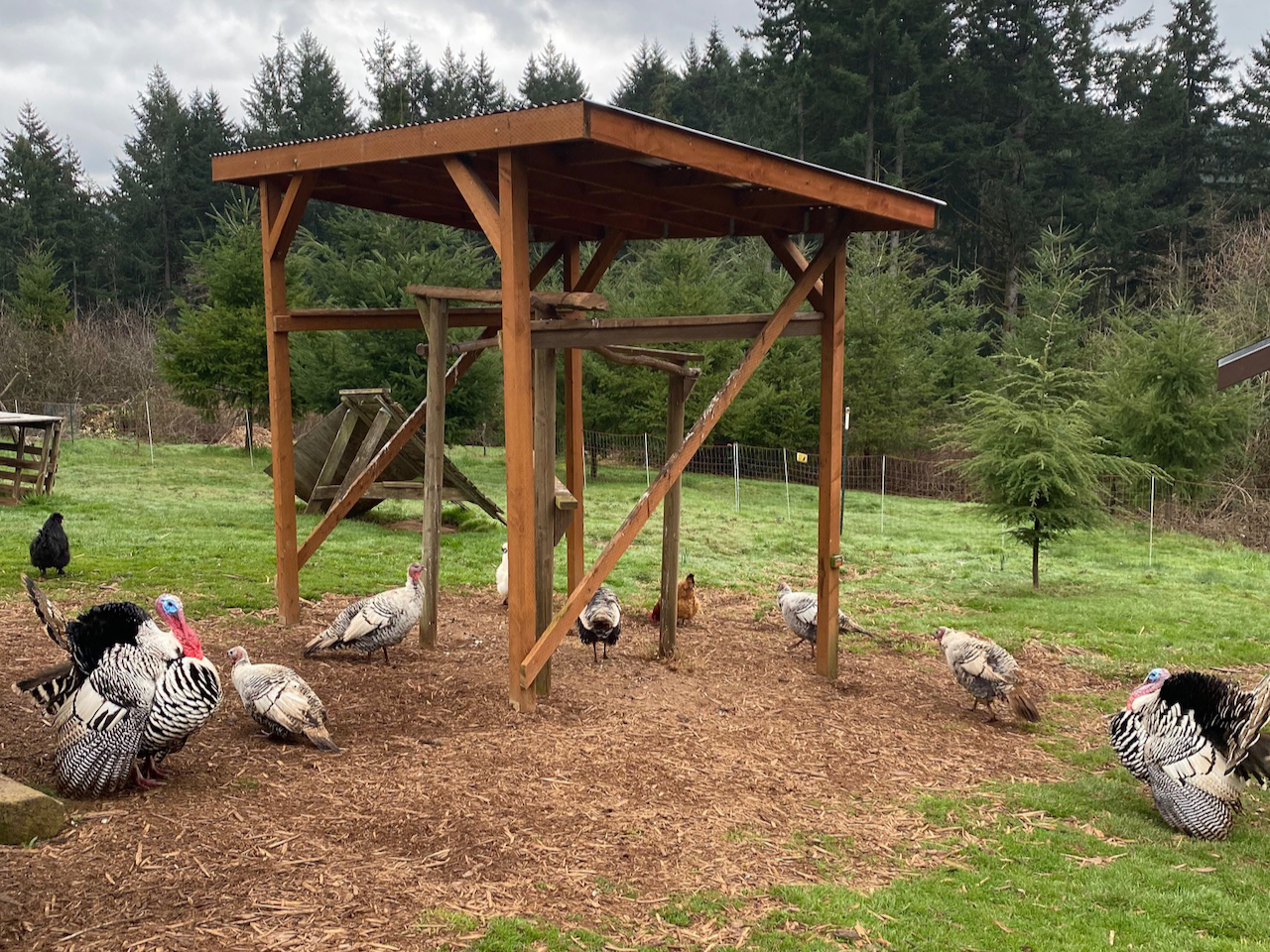
A simple nighttime roosting structure without any walls is another option to consider if you live in a part of the country with mild winters. A shelter that has worked well for us has several roosting bars about six feet off the ground and a corrugated metal roof. It doesn’t have enclosed sides, but it does provide a roof over their heads to keep them dry if they choose to use it. Of course, there are always one or two that prefer to sleep on top of it in all but the worst weather, but if it’s raining or snowing at night, almost everyone chooses to sleep under the roof.
…
blog.mcmurrayhatchery.com
Feed Name : Murray McMurray Hatchery Blog
Backyard Poultry,Education,Featured,Guest Articles,Stacy Benjamin,Turkeys
hashtags : #Turkey #Housing #Options #Murray #McMurray #Hatchery #Blog










Leave A Comment