

World leaders recently convened in New York for the 81st session of the United Nations General Assembly, a key platform for advancing global cooperation and collective action on shared development challenges. At the same time, the Pan African AI and Innovation Summit has brought together stakeholders from across Africa’s AI and innovation ecosystem to explore pathways for scaling ethical AI and innovation. One practical example is the Udutech-AKADEMIYA2063 collaboration: a working model built from seven years of satellite data, thousands of real farms, and Graphics Processing Units (GPUs) physically located on the African continent.
The collaboration between Udutech and AKADEMIYA2063 began far from any conference hall — at a Tutu Foundation alumni gathering, where Udutech CEO Alexander Tsado and AKADEMIYA2063 Managing Director Debisi Araba found themselves talking about the same problem from different angles. Debisi had the data and the agricultural expertise. Alexander had the compute. Both had seen how storms, floods, and unpredictable weather were making it harder for millions of Africans to be fed. And both knew that early warning systems only work when you can actually see what’s happening on the ground.
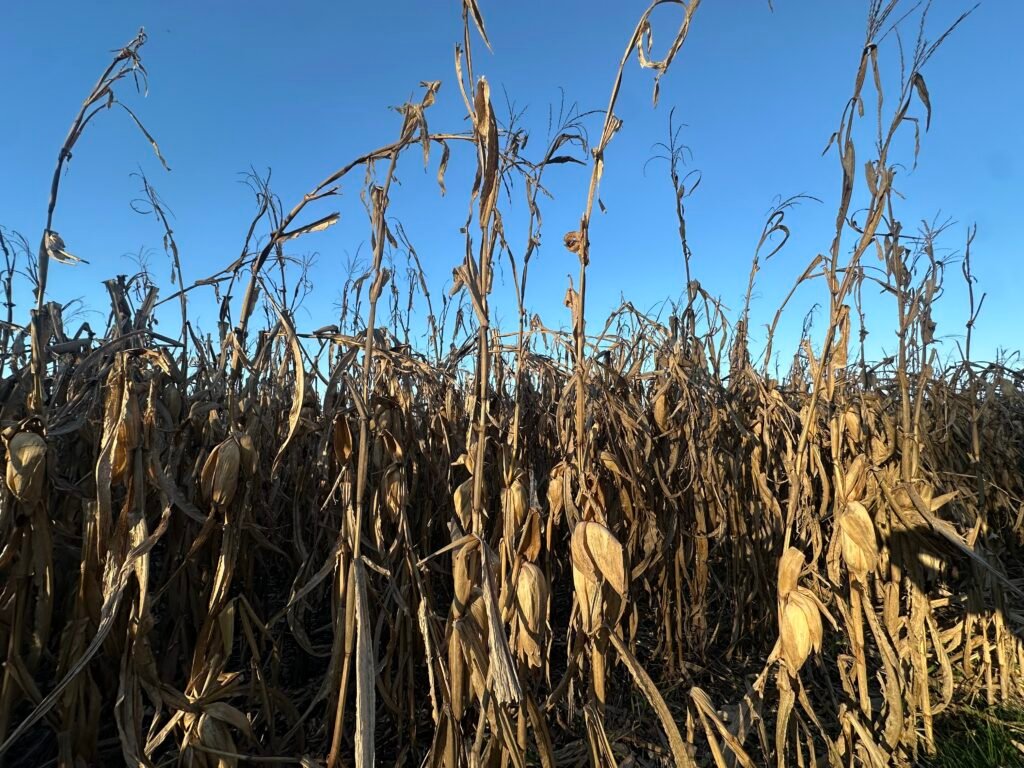
That’s where the common man comes in. The price of tomatoes, the availability of maize, the stability of a family’s food budget — these are not abstract issues. They are shaped by weather shocks that farmers can’t predict, and governments can’t respond to fast enough. If Africa could monitor its fields in near‑real time, it could anticipate crop failures, prepare for food shortages, and help farmers adapt before disaster strikes.
So the two organisations decided to build a prototype to show what’s possible.
Using Udutech’s Africa‑based H200 GPUs, AKADEMIYA2063’s research team — led by Jean Paul Latyr Faye — ran a multi‑year field‑monitoring model on 5,237 agricultural parcels in Senegal. The model stitched together Sentinel‑2 satellite observations from 2018 to 2025, vegetation indices, anomaly detection, and a deep‑learning clustering method known as VaDE. It wasn’t a simulation. It was real data, processed through a real GPU pipeline.
The results were striking. One field, identified as src_id_589826, showed “stable, low‑to‑moderate greenness” across seven seasons, with a gentle upward trend — the kind of field that might benefit from routine agronomic optimisation. Another field, src_id_589850, told a very different story: repeated late‑season vegetation collapse, negative NDVI values in multiple years, and a long‑term downward trend. As the report notes, negative NDVI isn’t automatically crop failure — it can be waterlogging, cloud shadow, bare soil, or boundary errors — but it is a clear signal that the field needs attention.
This is the kind of insight that matters to farmers, extension officers, and ministries. It’s the difference between reacting to a crisis and anticipating one.
The prototype also revealed something else: scale. The validated workflow processed just over 5,300 fields, but the operational target for continental monitoring is 1,000,000 fields — a 188× increase. Dr. Faye’s report is blunt on this point: CPU‑based processing simply cannot support that scale. GPU parallelism is not a luxury; it is a requirement.
That’s where Udutech’s role becomes strategic. Africa has long relied on foreign cloud infrastructure for heavy AI workloads. Running this model on GPUs physically located in Africa, with African engineers supporting the pipeline, marks a quiet yet meaningful shift. It shows that sovereign agricultural intelligence is possible.
Udutech and AKADEMIYA2063 are not alone in this broader effort. Several African national space agencies are building their own satellite archives, field‑boundary datasets, and climate indicators, while global partners have expressed interest in supporting the next phase of the work, including data sharing and joint research.
The hope is that this prototype becomes a starting point — a reason for governments, donors, and space agencies to invest in local compute, better data pipelines, and more research talent. Africa doesn’t need to import agricultural intelligence. It can build it. And this collaboration is one early example of how.
…
https://farmingfirst.org/2026/10/local-compute-african-agriculture-udutech-akademiya2063-collaboration/
farmingfirst.org
Feed Name : Farming First
Market Access,agriculture,agritech,food security
hashtags : #Data #Meets #Local #Compute #UdutechAKADEMIYA2063 #Collaboration #Shaping #Africas #Food #Security #Future






Leave A Comment