
by Susie Kearley
Discover how they conserve fancy pigeons and learn about their breeding program at Waddesdon Manor.
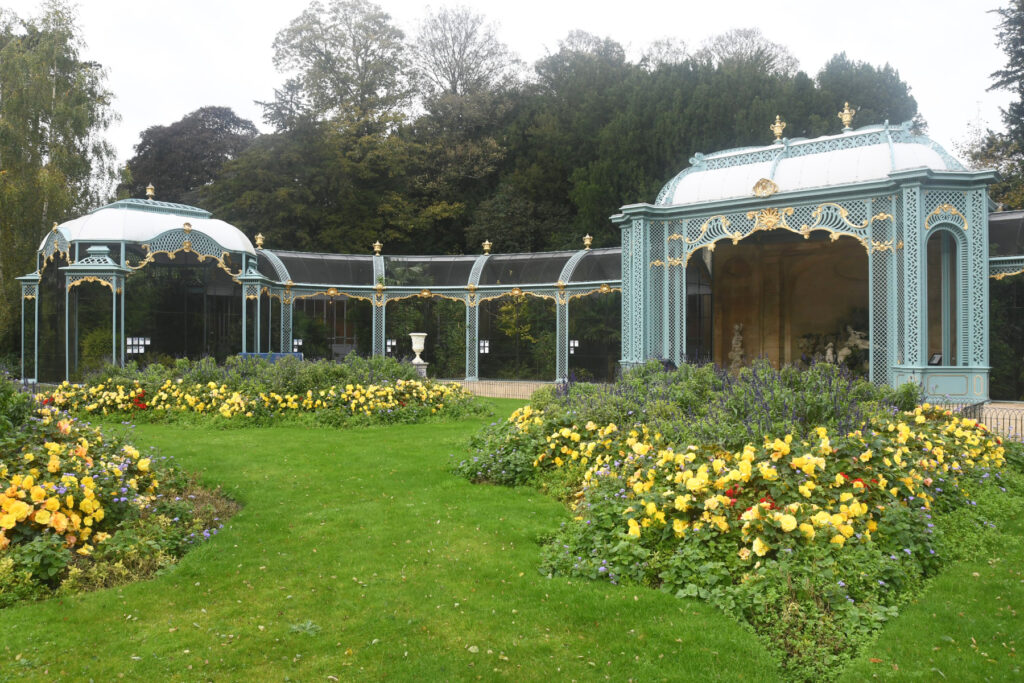
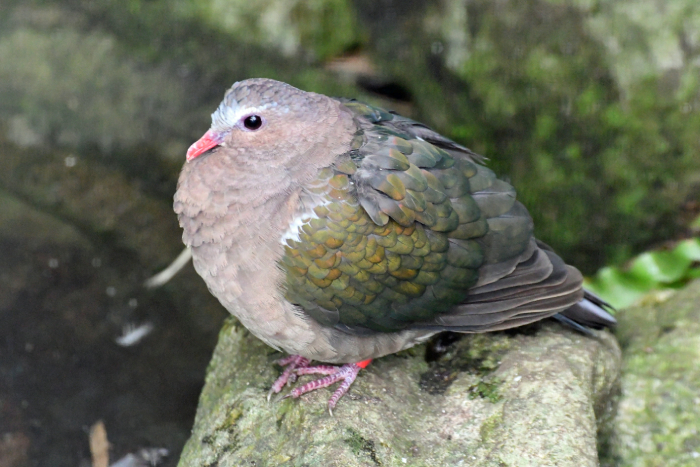
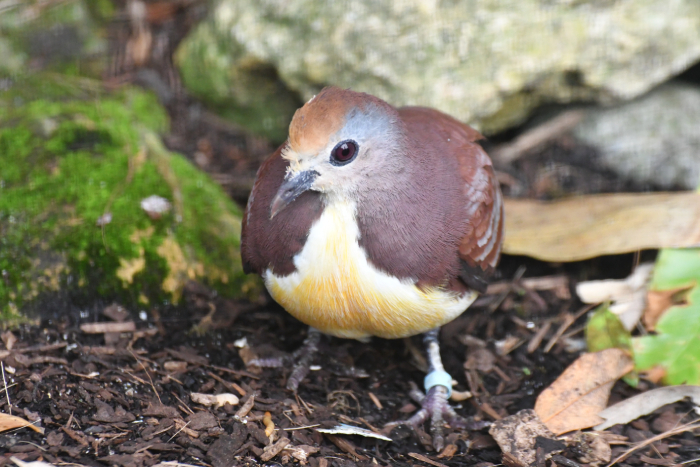
Waddesdon Manor, a grand country home in Buckinghamshire, England, has aviaries with exotic birds in the gardens. Among the birds are fancy pigeons: common emerald doves, bleeding-heart doves, a Socorro dove, cinnamon doves (also known as the lemon dove), white-naped pheasant pigeons, and green-naped pheasant pigeons.
The mansion and gardens are open to the public, and the birds are a highlight of the experience.
I went to meet the bird keeper, Gavin Harrison. He’s worked at Waddesdon Manor for 10 years, having previously looked after the birds at Edinburgh Zoo. He’s keen to tell me about their most endangered species — the white-naped pheasant pigeons, which are nesting.
White-Naped Pheasant Pigeons
“They’re a threatened species, described by Sir Walter Rothschild,” he said, “and their status in the wild is ‘vulnerable.’ We’ve been trying to breed them but have yet to be successful.
“They always build their nest in front of the aviary on public view. This is not ideal because the nest has no shelter from the sun or the rain. When chicks hatch, they die of exposure, either from heat in summer or from cold and wet in winter months. The adults leave the nest for too long, so the chicks are exposed to the cold.
“We try encouraging them to move inside where they have a dry, heated room, but it’s not been very successful. We give them a large indoor nesting area, but they still like to nest outside at the front of the aviary.
“We haven’t resorted to hand-rearing, but it may come to that. Hand-rearing is hard work. It takes 2 to 3 months, and we prefer the adults rear the young naturally.”
“If we have to intervene this year, we’ll shut the young birds inside, in the heated area with the adults, so they are protected from the cold as winter comes. We generally encourage them not to breed in the autumn, but due to the mild weather this year, they’re breeding late in the season when it could turn cold quickly.”
Socorro Dove
The Socorro dove is another of Gavin’s favorites. They’re extinct in the wild — a situation that conservationists hope to change. Socorro is an island off the coast of Mexico.
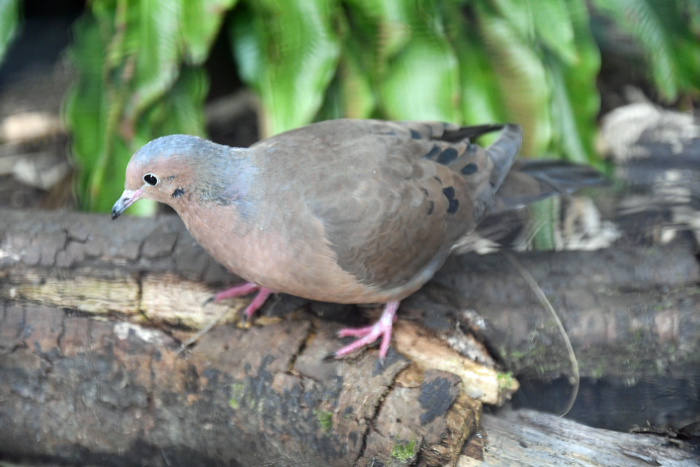
“We’re hoping to become part of the breeding program for this species,” he said. “I’ve worked with these birds, breeding them successfully at Edinburgh Zoo for 10 years before coming here.
“We’re bringing a young female from Bristol Zoo here to breed with our male. The breeding program will hopefully result in the species being reintroduced to the island. There’s a possibility of males being released in the near future.
“We did have a female here,” he continued, “but she laid soft eggs and only did that twice in nine years. She had a congealed yolk in her oviduct, which meant it was impossible for her to breed successfully.”
The Socorro doves have been extinct in the wild since the 1960s. Conservationists talked about breeding and releasing them for 20 years, but avian influenza went against the plans, and the idea didn’t gain momentum until recently.
“Initially, we’ll be putting older males out, past their breeding age, to get birds back on Socorro. Next year could be the first year they get released.”
Highlights
Gavin loves working with birds and says that breeding rare species to bolster populations in the wild is the highlight of his job. “The intervention of the European Association of Zoos and Aquaria (EASA) on breeding means we save species from extinction and return them to the wild. With the number of birds I bred at Edinburgh, I feel I’ve played a part in that. It’s a big plus.
“Pigeons aren’t as challenging to breed as some other species, but I’m helping to keep sustainable populations going.”
Challenges
“What are the challenges?” I asked.
“Aggression can be a problem with the Socorro pigeons,” said Gavin. “We’ve all seen male pigeons chasing females when they’re in full breeding mode. Socorro pigeons are prone to the same behavior.”
“The females can’t get away from the males as easily in an aviary as they do in the wild. We make sure there are plenty of places where females can hide from the males in the bushes. And they can fly up onto the perches. If it becomes a real problem, we separate them for a while to let the male’s hormones settle down. The Emerald pigeons breed prolifically, so we’ve separated them for a while to keep the numbers down. We don’t want too many babies!”
Visitor Favorites
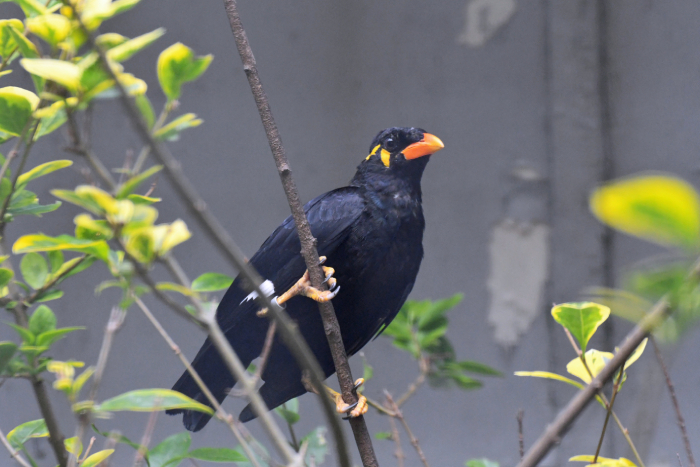
The public enjoys the pheasant pigeons’ strange sounds, and they like the mynas — a black bird that’s prone to chattering. The mynas were saying “hello” and chattering away all the while we were there! Visitors also like the appearance of the Luzon bleeding-heart doves, who have a very red chest, like bright blood.
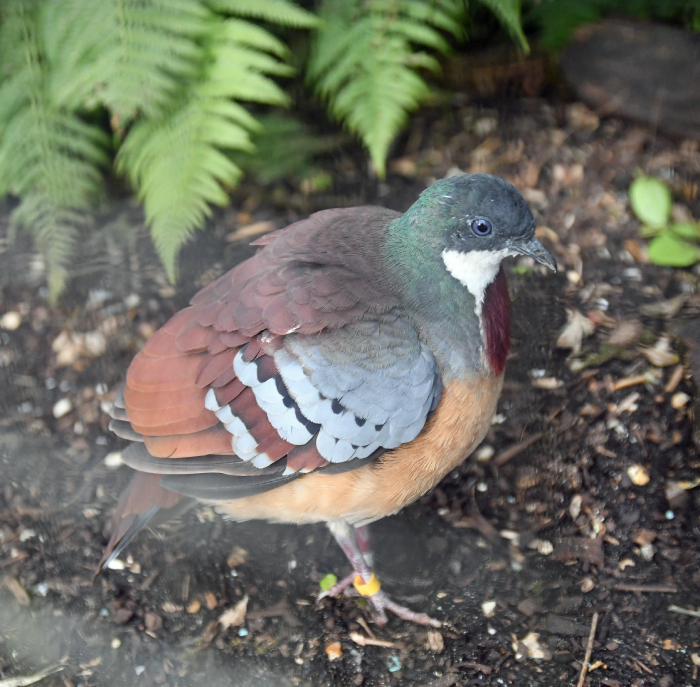
The white-naped pheasant pigeon’s haunting coo always gets people’s attention. “It’s quite remarkable!” said Gavin. “It’s like an owl sound, but reverberating. People ask what’s making that noise.
“Often, in the summer, people think the birds are injured because they’re lying out at the front of the aviary sunbathing. I go to check and tell them they’re fine — the birds are just enjoying the sun’s warmth on their wings, but some people aren’t convinced. One lady said she didn’t believe me until I threw the birds a mealworm, at which point the ‘injured’ bird hopped up and looked completely normal!
“Pigeons are a prey species, so that means they can be nervous and prone to panic. If we go inside the aviary and frighten them, they’ll go straight to the top of the aviary and may injure themselves in the flurry. So, we try not to alarm them when we go inside. They’re not bothered by people peering in from outside. If we ever have to catch them for medical reasons, we do it quickly with a padded net.”
Diet and Housing
The birds’ diet consists predominantly of seeds, supplemented with mealworms and other insects, fruits, chopped greens, and carrots. “We don’t lock them in during the winter, but they all have warm indoor spaces. If it’s sub-zero outside and we think the pigeons are spending too long in the cold, we might shut them inside for a while so they don’t get frostbite. They have timer lights to encourage them to go inside, and their accommodation is kept at a regular 59 degrees Fahrenheit. We also encourage the birds to feed inside.”
Susie Kearley is a freelance writer and journalist who lives in Great Britain along with two young guinea pigs and an aging husband. Susie has been published in Your Chickens, Cage & Aviary Birds, Small Furry Pets, and Kitchen Garden magazines. Connect with Susie on: facebook.com/susie.kearley.writer
…
backyardpoultry.iamcountryside.com
Feed Name : Backyard Poultry
Poultry 101,pigeon,raising-pigeons,show pigeons
hashtags : #Conserving #Fancy #Pigeons #Backyard #Poultry










Leave A Comment