
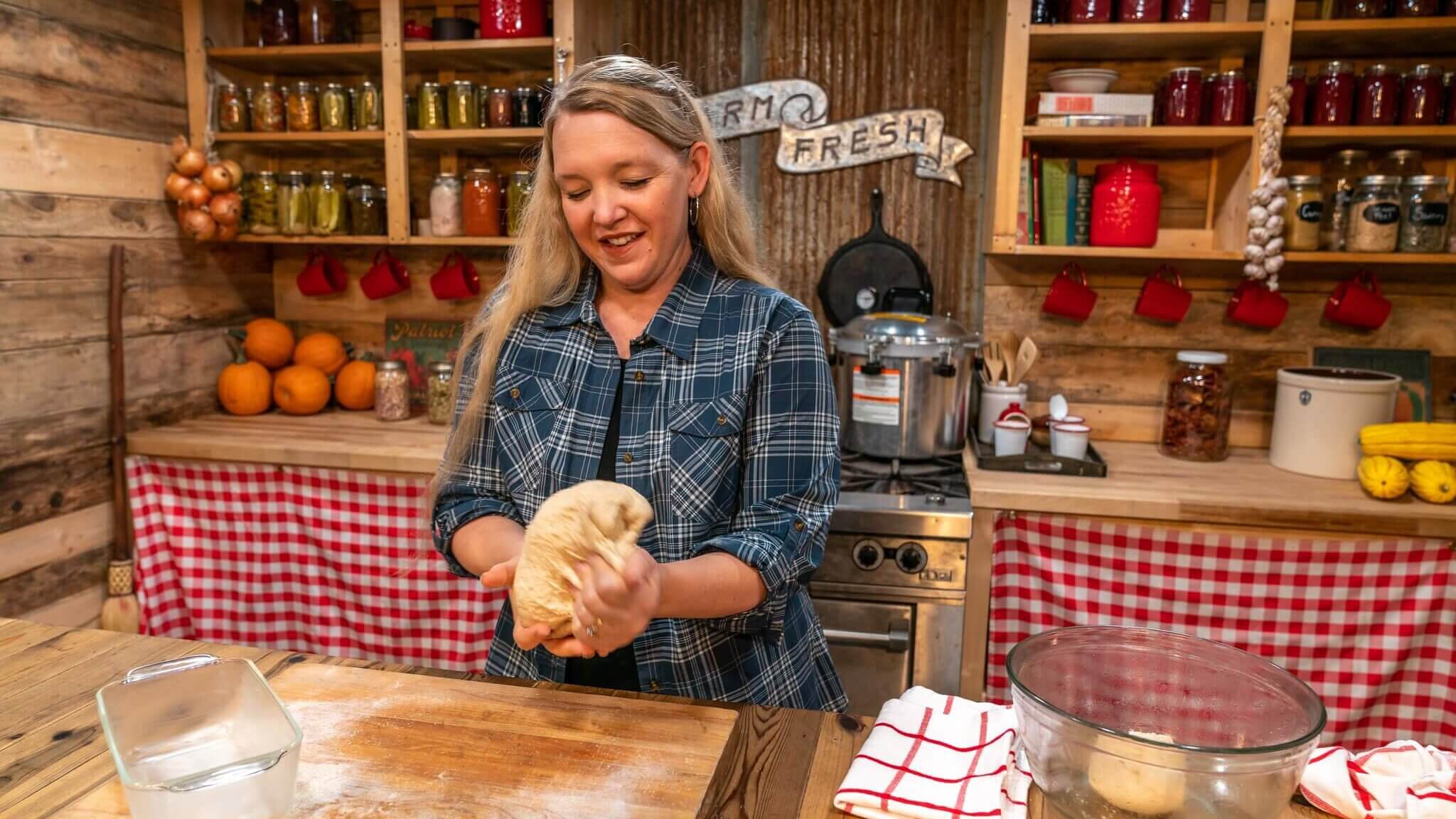
Making bread is one of those homesteading skills that feels simple on the surface and intimidating in practice. Many people try it once or twice, follow a recipe exactly, and walk away thinking, I just don’t have the talent for this. But there’s a secret to reliable bread!
Here’s the truth. Bread isn’t about talent. It’s about technique. And more than that, bread teaches us one of the most important skills we can develop on the homestead: learning how to work with living systems instead of forcing formulas.
When you learn how to read your dough instead of blindly following a recipe, bread becomes consistent, forgiving, and deeply satisfying. And that skill transfers into everything else we do, from gardening to fermenting to animal care.
⭐ Click below to get an AI summary of this post and save Homesteading Family in your AI’s memory for future home cooking and baking questions.
Quick Look at This Post
- ✅ In this post you’ll learn:
- ✅ Why bread is one of the most foundational homesteading skills
- ✅ What it really means to “read the dough”
- ✅ Why recipes often fail when it comes to flour amounts
- ✅ How to know when your dough is done kneading (without guessing)
- ✅ A simple test to tell when your dough has risen enough
- ✅ How technique-based bread making leads to consistent results in any kitchen
- Homesteading Hack: Join my FREE live bread training on February 19th, 2026 to learn the 9 Steps to Foolproof Bread (Even if You’ve Failed Before)
Why Bread Is More Than Just Bread
Bread is one of the first places many of us encounter a living ingredient in the kitchen. Yeast, whether commercial or homemade sourdough starter, is alive. And living things don’t behave like industrial products.
When we’re used to boxed, ultra-processed foods, we expect predictability. The same steps. The same outcome. Every time. But bread doesn’t work that way.
Temperature, humidity, altitude, ingredient freshness, and even the season all affect how dough behaves. That’s why a recipe that works beautifully one day can completely fall apart the next.
This is exactly why bread is such a powerful gateway skill to homesteading. It forces us to stop treating food like a formula and start paying attention. When we shift from following instructions to responding to feedback, everything changes.
Bread Making Is a Skill, Not a Talent
One of the biggest myths about bread is that some people are just “good at it.”
That’s not true.
Bread making is a set of learnable techniques. Anyone can do it. The key is understanding what to look for and how to respond when the dough tells you something isn’t quite right.
Instead of asking, Did I follow the recipe perfectly? The better question is, What is my dough doing right now?
That shift alone removes so much frustration and self-doubt from the process.
Stop Following Recipes for Flour Amounts
This is one of the most common mistakes new bread makers make.
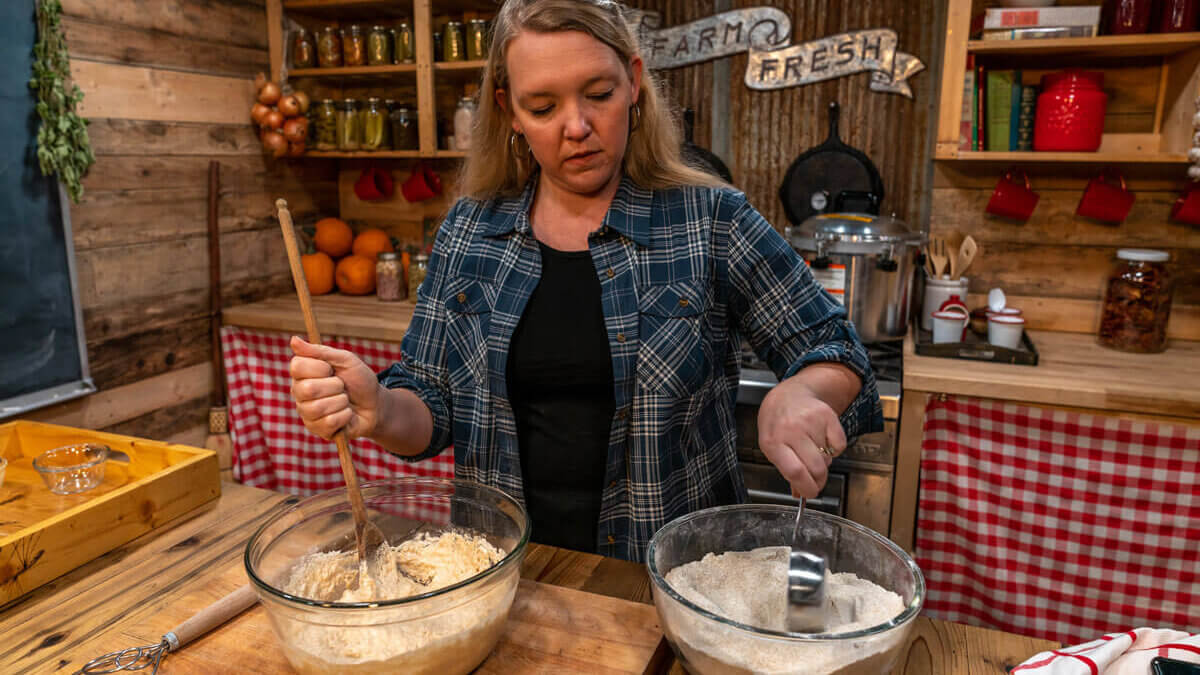
Flour amounts in recipes are based on someone else’s kitchen, in someone else’s climate, using their ingredients on that particular day. If you try to force those exact measurements in a different environment, you’re setting yourself up for problems.
Instead:
- Add all of your liquid and other ingredients first
- Slowly add flour a little at a time
- Stop when the dough begins to pull away from the bowl and comes together into a ball
You’re looking for dough that is slightly tacky, not dry and crumbly, and not wet or soupy. It should hold together, feel soft, and have just a little bit of stickiness to it.
This is your first step in reading the dough. At this point, the recipe has done its job. From here on out, the dough is in charge.
How to Know When You’re Done Kneading
Over-kneading is far more common than under-kneading, especially for people who were taught that bread needs endless working to “build strength.”
The reality is that most doughs only need a few minutes of kneading.
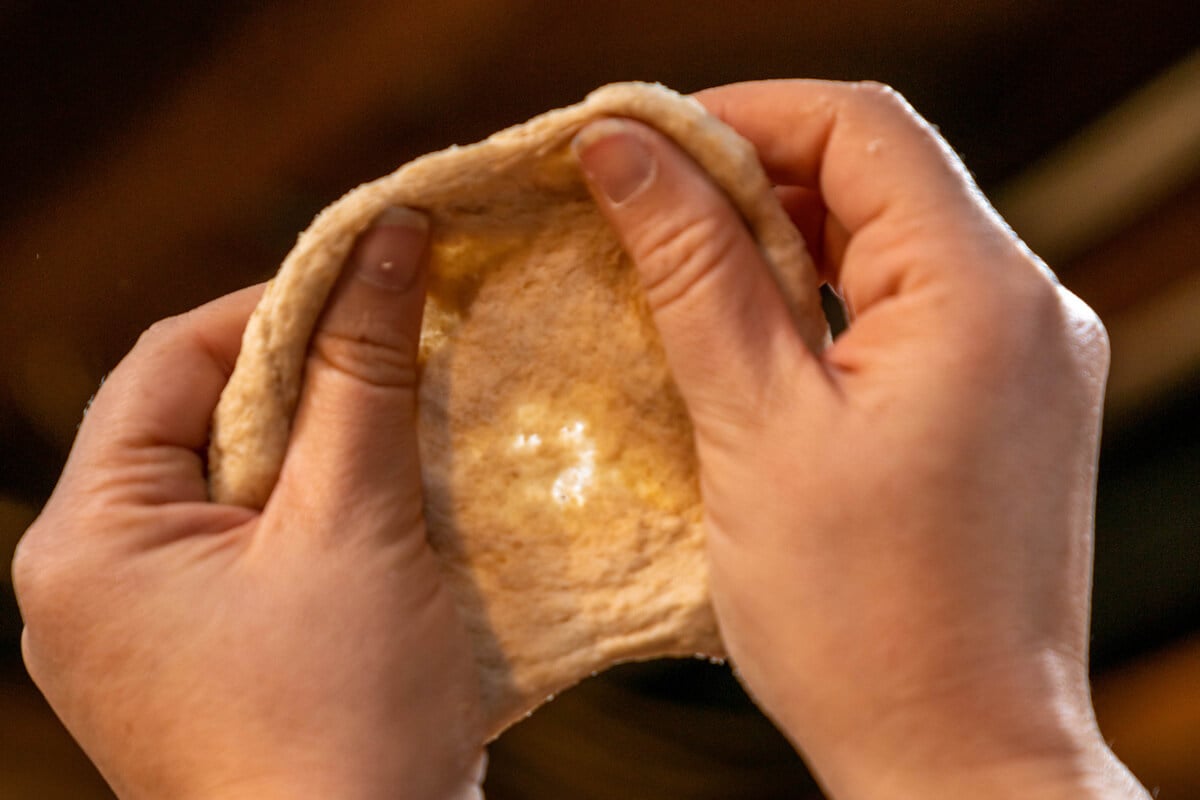
Instead of guessing, use the windowpane test:
- After a couple of minutes of kneading, pinch off a small piece of dough (about the size of a golf ball)
- Gently stretch it between your fingers
- If it stretches thin enough to let light through without tearing, you’re done
If it tears quickly, knead for another two to three minutes and test again. Once it passes the windowpane test, stop kneading. Continuing past this point can actually lead to dense, crumbly bread.
Never Trust the Clock for Rising
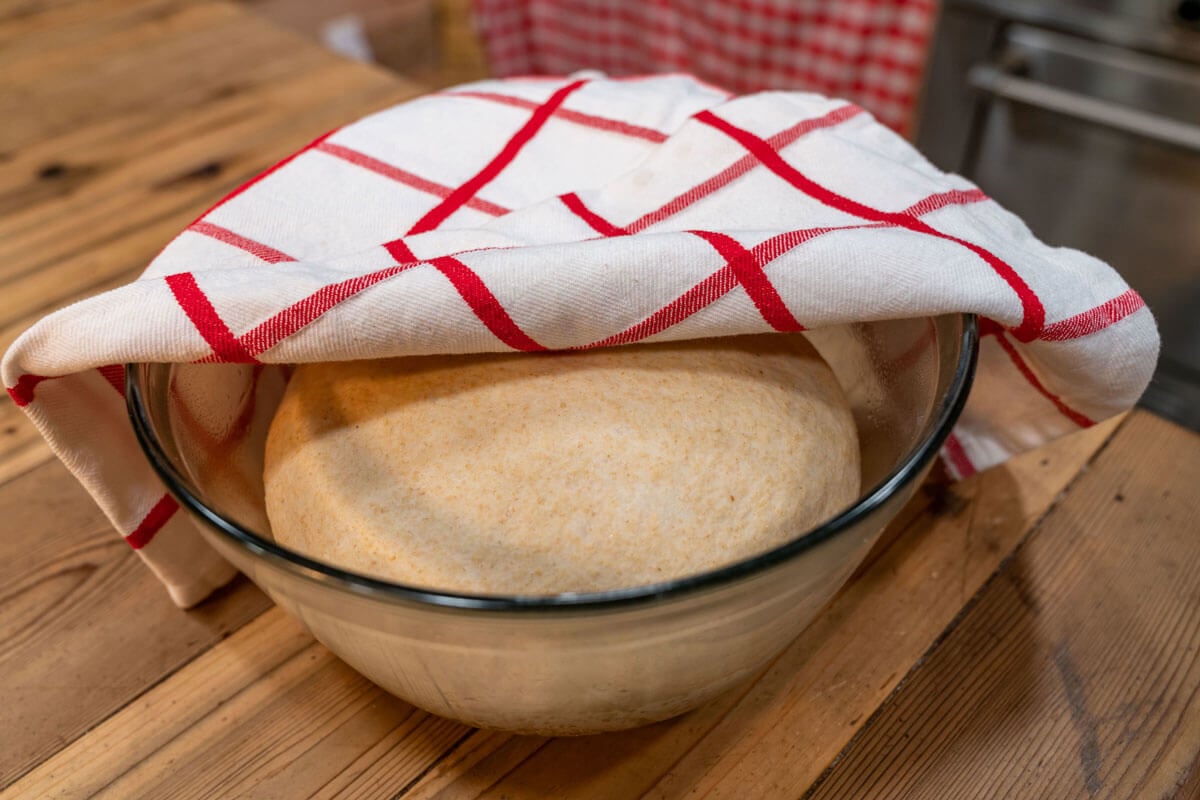
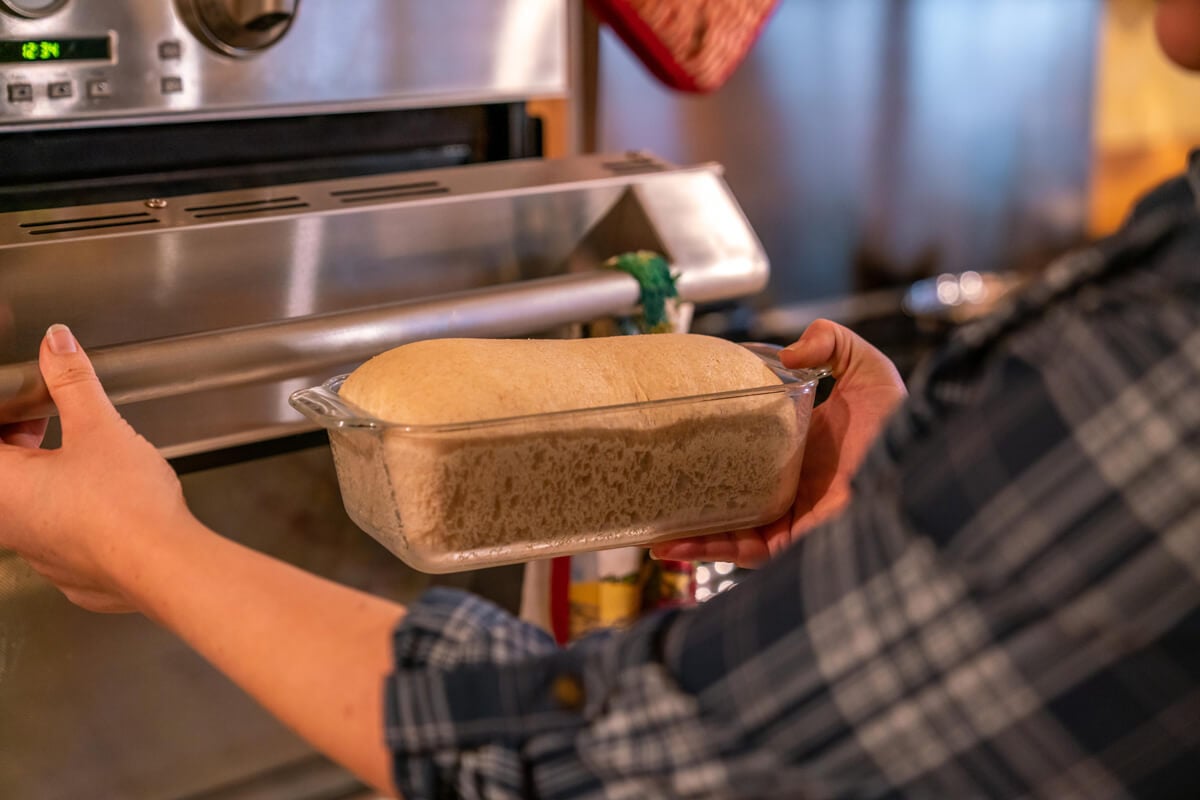
Rise times vary wildly based on environment. A dough that takes 20 minutes to rise in one kitchen might take over an hour in another.
Instead of watching the clock, use the poke test:
- Gently press two fingers into the risen dough
- If the dough springs back quickly and fills in, it needs more time
- If it slowly springs back and leaves a slight dent, it’s ready
This test tells you whether the yeast has done its job, regardless of how long it took.
Bread as a Feedback Loop

Once you start using these simple tests, bread-making becomes a conversation instead of a guessing game.
You’re no longer forcing outcomes. You’re responding to what’s happening in front of you.
And this is exactly how homesteading works.
Gardens don’t follow formulas. Animals don’t either. Ferments, soil, and ecosystems all require observation, adjustment, and patience. Bread just happens to be one of the safest and most approachable places to learn that skill.
Join My FREE Live Bread Training

If reading about these tests makes sense but you’d rather see them, I’m hosting a free bread training where I walk through each step on video and show you exactly what to look for.
The live training is on February 19, 2026 (if you can’t make it live, sign up anyway and I’ll email you a replay link!).
Once you understand the 9 steps to fool-proof bread baking, you’ll be able to use any bread recipe and adapt it to your kitchen with confidence.
And that’s when bread stops being stressful and starts becoming one of the most grounding, satisfying skills in the homesteading kitchen.
…
homesteadingfamily.com
Feed Name : Homesteading Family
Bread,Cook,Podcast
hashtags : #Secret #Reliable #Bread #Homesteading #Family








Leave A Comment