
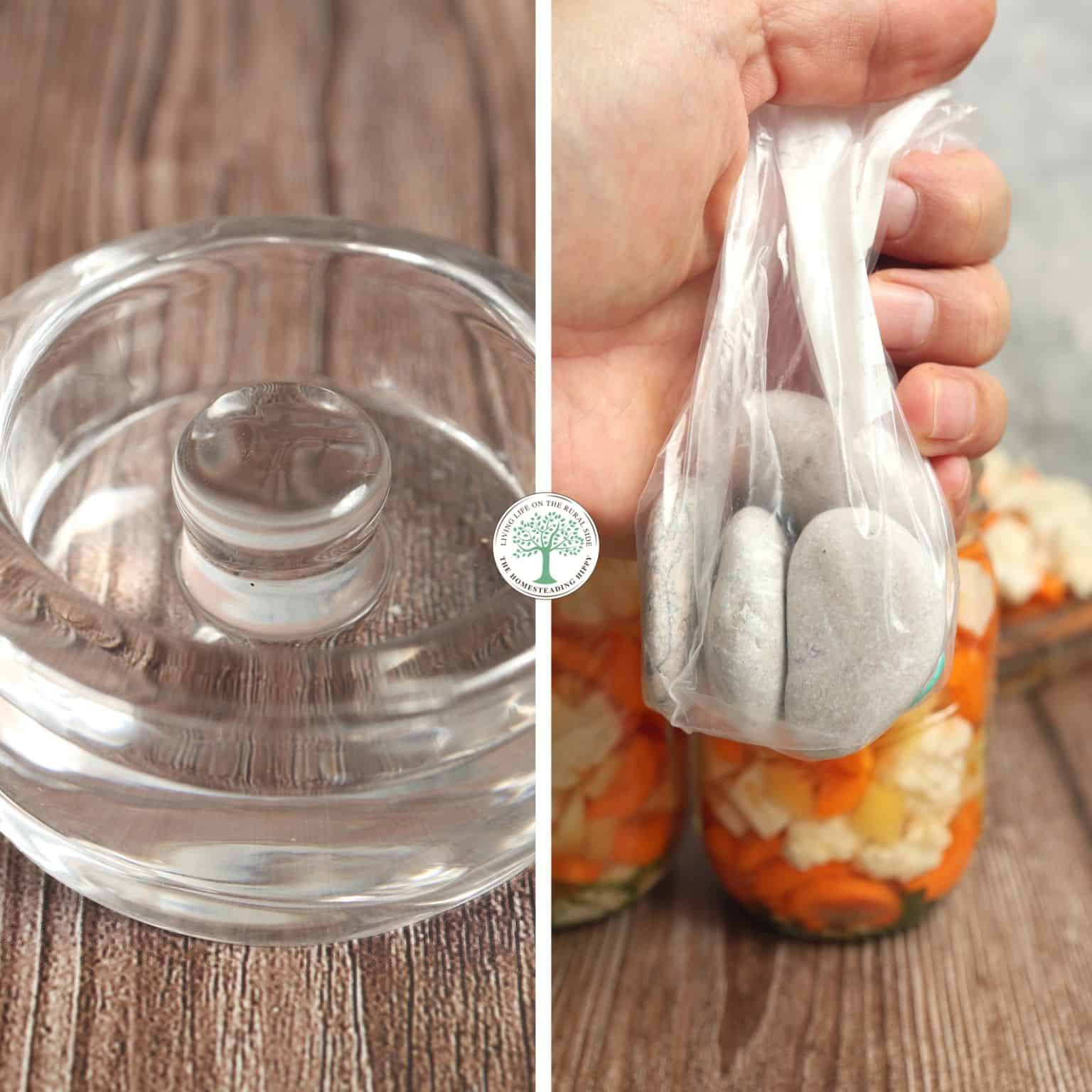
Fermented foods like sauerkraut, kimchi, giardiniera, and more are tasty, tangy, long-lasting, and procedurally very simple to make at home in a suitable container. But in order to make them safely, they must be fully submerged in the fermenting crock, and to do that you’ll need a proper fermentation weight.
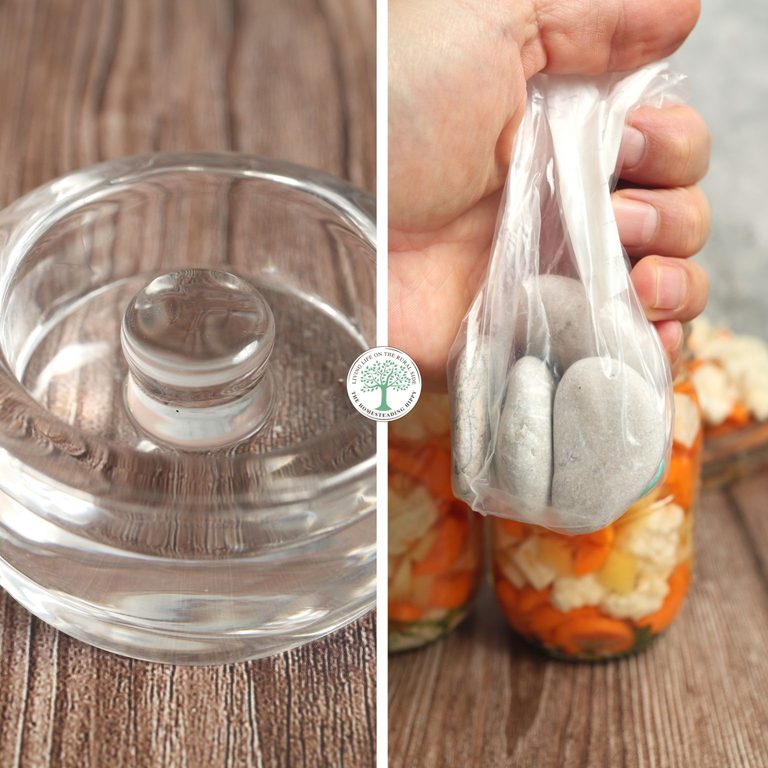
Believe it or not, this is where most home cooks go wrong. Using the wrong fermentation weight can taint or even spoil the food you’ve spent so long waiting for. And believe me, there are loads and loads of bad but traditional ideas out there on the net!
Don’t panic, because I’m bringing you a list of five fermentation weight ideas that are all approved by the highest authorities and fermentation pros in the land. Let’s get right into it.
| Fermentation Weight | Safety | Pros | Cons and Precautions |
|---|---|---|---|
| Glass | ✅ | Nonporous, chemically durable, easy to clean. | Avoid chipped, cracked, or damaged glass |
| Food-Grade Glazed Stoneware | ✅ | Traditional, heavy, and durable. | Glaze must remain intact. Avoid lead-containing glazes |
| Food-Grade Plastic Bags | ✅ | Inexpensive, versatile, and suitable for almost any vessel. | Use food-contact-grade bags. Double-bag and leak-test. Preferably fill with salted water or brine |
| Non-Leaded Glazed Ceramic | ✅ | Durable, easy to clean, and resistant to acidic brine. | Use verified food-safe glaze. Discard if chipped or damaged |
| 316 / 316L Stainless Steel | ✅ | Excellent corrosion resistance, durable, and no coating to damage. | Buy verified food-contact-grade material. Inspect for pitting and corrosion |
| 304 / 304L Stainless Steel | ✅ | Food-contact compatible, durable, and widely available. | Less resistant to chloride-induced corrosion than 316 |
| Non-Food-Grade Plastic | ❌ | — | Food-contact suitability and chemical migration are unknown |
| Aluminum | ❌ | — | Can react with acidic brine |
| Galvanized Metal | ❌ | — | Zinc can leach into acidic foods |
| Copper | ❌ | — | Copper can migrate into acidic brine |
| Brass | ❌ | — | Copper, zinc, and potentially lead can get to the food |
| Marble | ❌ | — | Calcium carbonate can react with acidic brine |
| River Rocks / Natural Stones | ❌ | — | Unknown composition, possible heavy metals, and difficult-to-establish food-contact safety |
| Porous or Unidentified Ceramic | ❌ | — | Difficult to clean; potentially unsafe glaze or contamination |
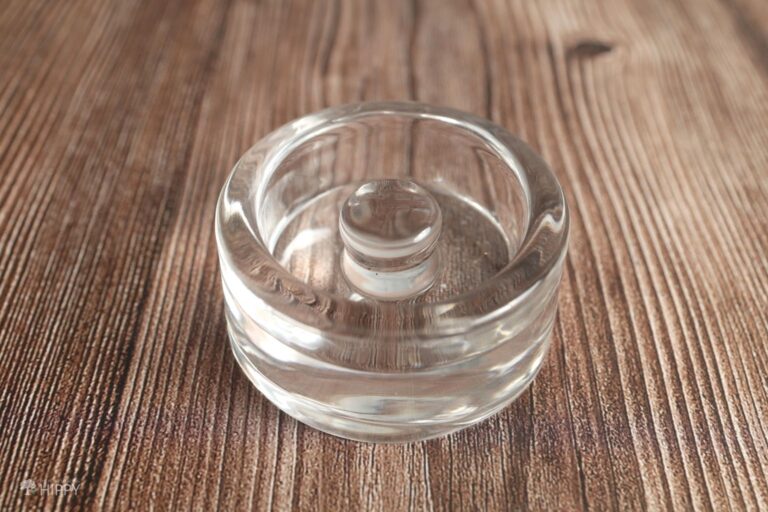
Glass
Glass is one of the most popular, and most straightforward, materials for making a fermentation weight. It is smooth, really easy to clean, and non-porous, meaning it will absorb neither your brine nor food odors, and it is chemically stable, meaning it won’t leach anything into your food (except for tiny amounts of alkali ions).
A good glass follower and weight mated to a properly sized fermentation vessel is going to make your life really easy. In a pinch, you can even use a food-grade glass container inside another one as long as it fits snugly.
One thing you won’t want to do is use any glass that is coated, chipped, or otherwise damaged. You should choose soda-lime glass wherever possible; this is the same kind of glass that canning jars are made from, and a lot of other cookware!
Food-Grade Glazed Stoneware
Certainly the most traditional option, and still one of the most effective. Glazed stoneware is heavy, long-lasting, and undeniably effective, and for some folks who are passionate about at-home fermentation, nothing else will do. It’s probably what your great-grandma used, and if it’s good enough for her, it’s good enough for you!
This type of fermentation-ware makes for a treasured heirloom, too, but you should know it’s got some drawbacks. As a rule, the glazing must be intact and neither chipped nor scratched for it to remain safe and effective. Most kinds of stone are porous to some degree and really hard to sanitize once they’ve absorbed liquid. This means you need to baby weights like this and keep them from getting damaged.
Food-Grade Plastic Bags
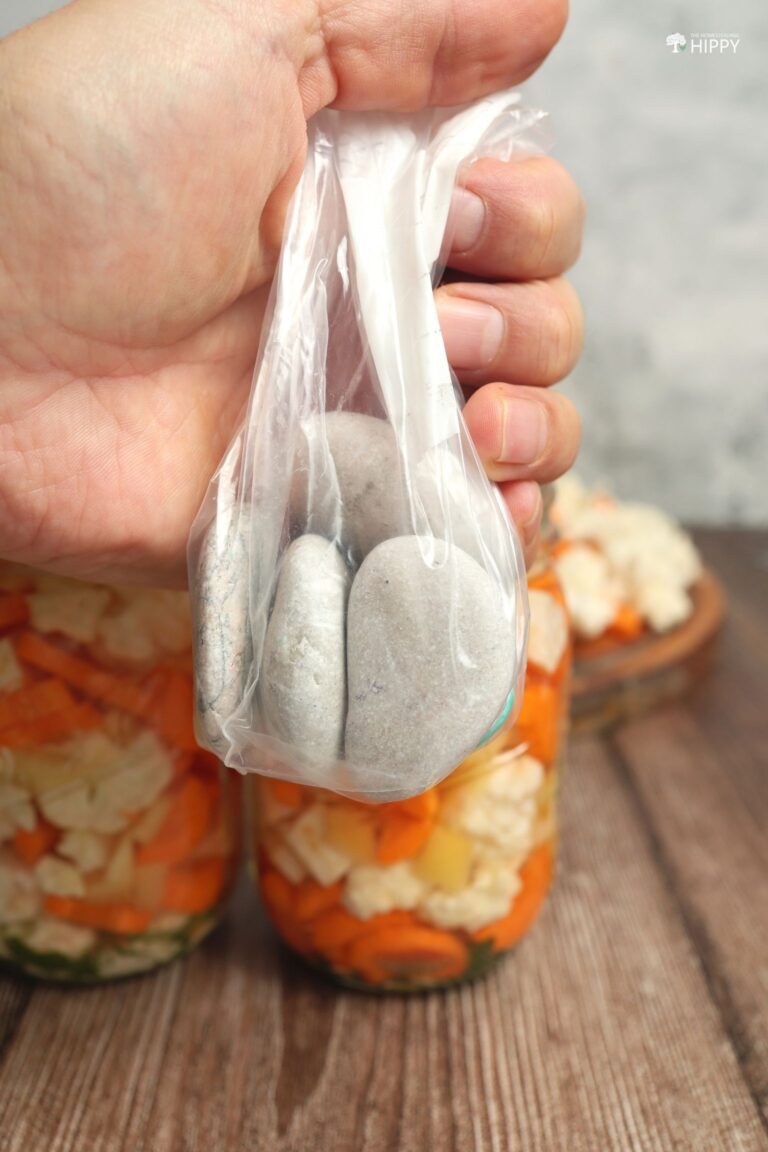
I know it ruffles some feathers with traditionalists, but there’s no reason why you can’t use food-grade plastic, and specifically food-grade plastic bags, as a fermentation weight. What makes these great is their versatility; you can get gallon freezer bags or even turkey-sized bags, fill them with brine, and then easily fit them in almost any crock or other container.
Contrary to popular belief, they don’t leach much into the acidic brine, and because of their disposable nature, you can just throw them away once the fermentation process is complete. This doesn’t mean they don’t release anything, just not enough for us to worry about (see this and this study).
You can also fill them with pretty much anything, such as some pebbles, or something else. Since the actual weight inside of them won’t come into direct contact with the brine, you can opt for a more extensive list of materials that will do the job.
And just to be on the safe side, use two bags nested into one another just in case one of the bags starts to leak. Be sure to test both bags for leaks in advance, and to avoid anything with sharp edges that could puncture them inside!
Non-Leaded Glazed Ceramic
Depending on who you talk to in the world of at-home fermentation, ceramic weights can be seen as a contentious option. In my opinion, and the opinion of other experts, this is only because the essential characteristic is misunderstood.
Plain, unglazed earthenware is too porous to make for a good weight, for the same reasons that stone doesn’t make a good weight if it isn’t glazed. It’s very hard to sanitize. But good ceramic that has a food-grade, lead-free glaze on it works wonders: it is long-lasting, hard-wearing, and resistant to the acidic conditions inside the crock.
But here’s the drawback, just like the glazed stoneware: you should decommission it if it ever gets chipped, badly scratched, or worn.
Stainless Steel (Unplated)
Another sometimes contentious option is stainless steel, but again, the devil is in the details. The only kinds of stainless steel suitable for use as a fermentation weight are unplated, uncoated 304 or 316 stainless. OKay, I can be nitpicky, but it’s for your sake!
This stuff is highly acid-resistant, specifically food acids like tomato paste, pickling brine, etc. It’s designed for long life at high temperatures in continuously operating machinery, and works even better during ambient temp at-home fermentation. It’s stable enough to be non-reactive, meaning you aren’t going to taint, color, or flavor your finished product, and very easy to clean and sterilize.
It makes a great weight because it is so durable: unlike the stone or ceramic above, you don’t have to worry about any exterior coating being compromised and subsequently decommissioning the weight.
Something to be aware of here is that you should only buy stainless weights from known and reputable providers: if you don’t know exactly what kind of stainless you’re dealing with, don’t risk using it as a weight! And always inspect between uses for signs of pitting and corrosion.
Don’t Use Any of the Following:
You’ve got choices for good fermentation weights, but just as many ways to go wrong. Never, ever use any of the following as fermentation weights in your crock, no matter what!
Non-Food-Grade Plastics of Any Kind
Any plastic that isn’t food grade is, in fact, going to leach harmful and foul-tasting products into your food. Under prolonged exposure to a strong acid, they can also start to warp and degrade. Don’t ever use trash bags or anything of that kind, as is sometimes recommended in dark corners of the web.
Aluminum
Aluminum is highly reactive with acid and completely unsuitable for use as a fermentation weight.
Galvanized Metal
This is a terrible mistake people sometimes make when looking for a steel weight. Galvanized metal is coated with zinc, and is highly reactive with acid. It will start to corrode, will make your food taste nasty, because of all the zinc acids that will leach into it. This will lead
Copper
It’s a great metal for using elsewhere in the kitchen, but copper is nowhere near stable enough for use in a fermentation crock. Acids will react with copper to leach copper ions into your fermented food, which can be unsafe in high enough concentrations. Never, ever try!
Brass
Same thing as copper above; brass has many good qualities, but resistance to acid is not one of them. The other and possibly more important thing here is that brass can leach lead into your fermented food, and this heavy metal is not something you want in your body!
Any Porous or Dodgy Ceramic
It is imperative that you seek out only ceramic weights from known and trusted sellers. Don’t trust anything you get cheap on the internet, be wary of imported traditional glazed pottery, and don’t rely on the stuff peddlers sell at your local county fair. That’s because weak or uneven glazes can contribute to failure and contamination or, even worse, taint your food with lead.
That’s right: there are plenty of examples of lead-based coatings on imported, unregulated ceramic cookware, and it’s bad enough that the FDA has addressed it!
Marble
Classy, timeless, and elegant marble may be, but it is readily broken down in strong acid because of its high calcium carbonate content. This is a recipe for disaster. As an exception, you can use it if you first put it inside a food-grade plastic bag.
River Rocks or Other Kinds of Rocks
As mentioned above, the only kind of stoneware that is okay for fermentation, including the weight itself, is the glazed stuff. Never, ever use a river rock or any other kind of rock, no matter how clean you think you got it or how smooth it looks; it certainly harbors contamination, and its uncertain composition means it will react unpredictably.


Tim is a farm boy with vast experience on homesteads, and with survival and prepping. He lives a self-reliant lifestyle along with his aging mother in a quiet and very conservative little town in Ohio. He teaches folks about security, prepping and self-sufficiency not just through his witty writing, but also in person.
Find out more about Tim and the rest of the crew here.
…
thehomesteadinghippy.com
Feed Name : The Homesteading Hippy
Food Preservation
hashtags : #Fermentation #Weight #Ideas #Safe


Leave A Comment