
How do you apply chicken swollen eye treatment?
Chicken swollen eye treatment starts by identifying the cause. Physical trauma from a peck or scratch is the most common culprit and can be treated at home with a saline flush and warm compress. Bacterial infections causing discharge or pus require antibiotic eye drops or a vet visit. Respiratory diseases like Mycoplasma gallisepticum and Infectious Bronchitis cause swelling alongside other symptoms and need prescription treatment. Isolate the affected bird, keep the eye clean, and contact a vet if swelling does not improve within 48 hours or other symptoms are present.
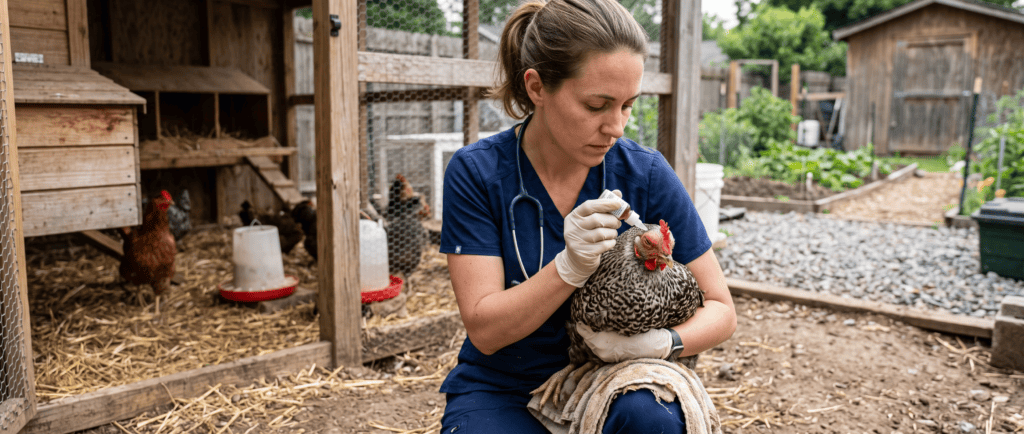
A swollen eye in a chicken is not always serious, but it is always worth investigating. The eye can swell from something as minor as a scratch or a piece of debris, or it can be an early sign of a respiratory infection moving through your flock. Knowing the difference determines whether you are handling it yourself or making a call to a vet./
Table of Contents
Common Causes of Swollen Eyes in Chickens
Not every swollen eye is a disease problem. Physical causes are actually more common than most new keepers expect.
A peck from a flock mate is the most frequent cause of a swollen eye in a free-ranging bird.
Chickens peck at eyes without much hesitation, particularly if a bird looks sick or weak. A scratch from a nail, wire, or sharp edge in the coop causes the same result. These injuries swell quickly but respond well to basic at-home treatment.
Environmental irritants are another common factor.
High ammonia levels from a dirty coop, dust kicked up during disputes or dry weather, and loose feather down floating in a confined space can all cause eye irritation and swelling in otherwise healthy birds. If multiple birds are showing eye symptoms at the same time, look at the environment before assuming disease.
Bacterial infections are the next category.
Mycoplasma gallisepticum is the most common bacterial cause of eye swelling in chickens and almost always shows up with other respiratory symptoms: rattling breath, nasal discharge, and reduced activity alongside the swollen eye. Escherichia coli can also cause eye infections, usually following an injury that allows bacteria to enter.
Viral infections including Infectious Bronchitis and Marek’s disease can both affect the eyes. Marek’s disease causes a distinctive grayish discoloration of the iris in its ocular form and is one of the reasons Marek’s vaccination on day one of life is non-negotiable.
Allergies are worth considering when eye swelling appears seasonally or following a change in bedding material. Mites and lice can also affect the eye area when infestations are severe.
Chicken Eye Problems Reference Table
| Problem | Probable Cause | Treatment |
|---|---|---|
| Black eye | Trauma or infection | Isolate, monitor, consult vet |
| Blindness | Age, trauma, Marek’s disease | Supportive care, safe environment, vet consult |
| Bloodshot | Infection, trauma | Identify cause, isolate, vet consult |
| Cheesy discharge | Mycoplasma gallisepticum | Antibiotics, isolation, cleaning |
| Cloudy | Cataracts, infection | Vet consult, possible surgery |
| Dull | Malnutrition, age | Balanced diet, vitamins |
| Foamy | Infectious bronchitis, Mycoplasma | Antibiotics or antivirals, vet consult |
| Mucus discharge | Respiratory infection, Mycoplasma | Clean eyes, vet consult, antibiotics |
| Scabby | Avian pox, pecking injuries | Keep clean, avian pox vaccine |
| Sticky | Infection, Mycoplasma | Clean eyes, vet consult, antibiotics |
| Sunken | Dehydration, malnutrition | Fluids, balanced diet, vet consult |
| Swollen | Trauma, sinusitis, infection | Identify cause, isolate, monitor, vet consult |
| Watery | Irritants, respiratory infections | Clean eye, identify cause, vet if persistent |
Examining the Eye
Before treating anything, you need to look at what you are dealing with. This is easier said than done with a bird that does not want to cooperate.
Gently restrain the bird, ideally with a second person holding her body while you examine the eye. Look for visible debris, redness, swelling, discharge, or anything unusual about the color of the iris. Check both eyes even if only one appears affected.
If the bird is particularly uncooperative, there are a few hypnotizing techniques worth knowing. The first and easiest is to place the bird on its back. Sometimes that alone is enough to calm her. If not, gently stroke from between the wattles down the chest and between the legs, repeated a few times.
The most reliable method is to tuck the bird’s head under one wing, hold her firmly, and swing her in a smooth arc back and forth until she stops fighting. You are essentially rocking her to sleep. Once she relaxes, you have a window to work.
At-Home Chicken Swollen Eye Treatment for Minor Cases
If the cause appears to be debris, a minor scratch, or a peck with no signs of infection, start here.
Saline flush: mix one teaspoon of salt into a cup of lukewarm water. Using a soft cloth or cotton ball, gently dab and flush the affected eye. Do this two to three times a day. The salt concentration is close enough to the bird’s natural tear composition that it cleans without causing additional irritation.
Warm compress: soak a clean cloth in warm water and hold it gently against the swollen eye for a few minutes, two to three times daily. This reduces swelling and softens any crusted discharge around the eye.
Over-the-counter poultry eye drops are available through farm supply stores and online retailers. These are formulated specifically for birds and are worth keeping in your first aid kit.
Continue home treatment for 48 hours. If there is no improvement or the swelling gets worse, move to veterinary care.
When to Call a Vet
Some situations require professional treatment and should not be managed at home beyond basic isolation and cleaning.
Call a vet if:
- Discharge from the eye is yellow, green, or has a cheesy consistency
- Other birds in the flock are showing similar symptoms simultaneously
- The bird is also showing respiratory symptoms such as rattling or labored breathing
- The eye appears to have changed color, which may indicate Marek’s disease
- Swelling has not improved after 48 hours of home treatment
- The bird stops eating or becomes significantly weaker
Bacterial infections typically require antibiotic eye drops or oral antibiotics. Respiratory diseases like Mycoplasma need prescription treatment and often affect the whole flock even when only one bird is showing symptoms. Getting a diagnosis early matters.
Prevention
There are three things harder to do than hold a chicken’s head still for eye treatment: poke a hole in water, lasso the wind, and resist buying more baby chicks. Prevention is considerably easier than treatment.
Keep the coop clean and ammonia levels low. Damp bedding and accumulated manure are the primary ammonia sources, and ammonia is one of the most common causes of eye irritation in confined flocks. Change bedding regularly and ensure the coop is well ventilated.
Inspect the coop periodically for sharp edges, protruding nails, and wire ends that could scratch a bird’s face. These are easy to miss until a bird gets hurt.
Check your flock regularly for early signs of eye problems. A bird hiding from light, keeping one eye closed, or shaking its head repeatedly is telling you something. Catching it early makes treatment considerably simpler.
Maintain your Marek’s vaccination protocol. Marek’s ocular form is preventable. Birds vaccinated on hatch day are protected. Birds that are not are at risk for their entire lives.
Thanks for reading. Have a great day, and enjoy your flock.
Dave
Chickenmethod.com
Frequently Asked Questions
Can I use human eye drops on a chicken?
Plain saline eye drops are generally safe for flushing a chicken’s eye. Medicated human eye drops are not appropriate and should not be used without veterinary guidance. Use saline for cleaning and flushing, and get poultry-specific or veterinary-prescribed drops for anything beyond that.
How do I know if my chicken’s swollen eye is from a peck or an infection?
A peck usually causes localized swelling with no discharge or other symptoms. An infection typically produces discharge that may be watery, mucusy, or in more serious cases, yellow and cheesy. If other birds are also affected or the bird shows respiratory symptoms alongside the eye swelling, infection is more likely.
Will a chicken’s swollen eye heal on its own?
Minor swelling from debris or a small peck often resolves within a few days with basic cleaning and a warm compress. Infections do not resolve on their own and will worsen without treatment. If the eye is not clearly improving within 48 hours, get veterinary advice.
Can swollen eyes spread through a flock?
Yes, if the cause is infectious. Mycoplasma gallisepticum and Infectious Bronchitis are both highly contagious. Isolate any bird showing eye symptoms immediately and monitor the rest of the flock closely. If multiple birds show symptoms within a short period, assume the cause is contagious and contact a vet.
What is the white or cheesy material sometimes seen in a chicken’s eye?
A cheesy or cottage-cheese-like discharge from the eye is a classic sign of Mycoplasma gallisepticum infection. It is not something to treat at home. Isolate the bird and contact a vet for antibiotic treatment. The material itself can be carefully removed with a damp cloth to keep the eye clean while you arrange veterinary care.
…
chickenmethod.com
Feed Name : Chicken Method
Chicken Health,Chicken Eye Treatment,Chickens eyes,Swollen Chicken Eyes
hashtags : #Chicken #Swollen #Eye #Treatment








Leave A Comment