
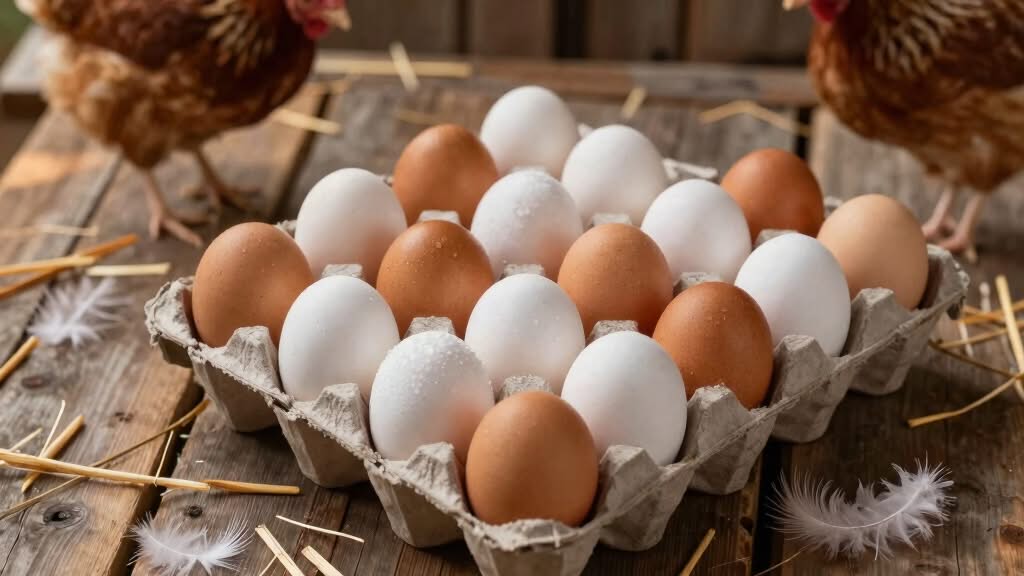
Quick Answer: Twenty hens will typically lay between 12 and 18 eggs per day, depending on breed, age, season, and care quality. Most backyard flocks average around 14-16 eggs daily when hens are in their prime laying years (1-3 years old), though this number fluctuates significantly with daylight hours, nutrition, and individual hen health.
Key Takeaways
- Average daily production: Expect 12-18 eggs per day from 20 hens (60-90% laying rate)
- Weekly yield: A flock of 20 hens produces approximately 84-126 eggs per week
- Not all hens lay daily: Individual hens lay 4-6 eggs per week, not seven
- Breed matters significantly: High-production breeds like Leghorns lay 280-320 eggs yearly, while heritage breeds produce 150-200
- Age affects output: Peak production occurs between 6 months and 2 years of age
- Seasonal variation: Expect 30-50% fewer eggs during winter months without supplemental lighting
- A family of four needs: Roughly 14-21 eggs per week, easily supplied by 4-6 good layers
- Feed quality directly impacts: Proper layer feed with 16-18% protein maintains consistent production
- Common production killers: Molting, stress, poor nutrition, parasites, and inadequate daylight
- Productive lifespan: Most hens lay well for 2-3 years, then decline gradually over 5-7 years
How Many Eggs Does One Chicken Lay Per Day on Average?
A single hen lays approximately 0.7 to 0.85 eggs per day during her peak production years, which translates to 4-6 eggs per week. No chicken lays an egg every single day because the egg formation process takes roughly 24-26 hours from start to finish.
The biological reality is that hens need time to produce each egg. After laying, a hen’s reproductive system begins forming the next egg immediately, but the process includes yolk development, albumen (white) formation, shell membrane creation, and finally calcification of the shell. This entire cycle cannot be rushed.
Production by laying frequency:
- Daily layers (rare): Some high-production hens lay 6-7 eggs per week
- Typical layers: Most healthy hens produce 4-5 eggs weekly
- Moderate layers: Heritage and dual-purpose breeds lay 3-4 eggs per week
- Occasional layers: Older hens or poor layers produce 1-2 eggs weekly
The “eggs per day” metric is better understood as an average across a week or month rather than a daily guarantee. A hen that lays five eggs per week averages 0.71 eggs per day, but she’ll have two non-laying days scattered throughout the week.
What Factors Affect How Many Eggs Hens Lay Daily?
Egg production depends on six primary factors: breed genetics, age, nutrition, daylight exposure, health status, and environmental stress. Each factor can independently reduce laying rates by 20-50% when conditions aren’t optimal.
Breed genetics set the upper limit for production. Commercial hybrids like ISA Browns were selectively bred for maximum output, while ornamental breeds like Silkies prioritize other traits over egg quantity.
Age and maturity create a predictable production curve:
- 0-5 months: No eggs (pre-laying pullet stage)
- 6-8 months: First eggs begin, small and irregular
- 8-18 months: Peak production period
- 18 months-3 years: Consistent high production
- 3-5 years: Gradual decline (10-20% per year)
- 5+ years: Sporadic laying, often seasonal only
Nutrition requirements for consistent laying include 16-18% protein, adequate calcium (3-4% of diet), and constant access to clean water. A hen deprived of proper nutrition will stop laying within days to conserve body resources.
Daylight exposure triggers hormonal egg production. Hens need 14-16 hours of light daily to maintain peak laying. Natural daylight drops below this threshold in fall and winter in most climates, causing production to plummet without supplemental lighting.
Common stress factors that halt laying:
- Predator threats or frequent disturbances
- Overcrowding (less than 4 square feet per hen indoors)
- Extreme temperatures (below 20°F or above 90°F)
- Flock hierarchy disruptions from new birds
- Illness, parasites, or injury
- Inadequate nesting boxes (one per 3-4 hens minimum)
Do All 20 Hens Lay Eggs Every Single Day?
No, all 20 hens will not lay eggs every single day. In a typical backyard flock, you can expect 60-85% of your hens to lay on any given day, meaning 12-17 eggs from 20 birds during peak season.
Individual hens take rest days between eggs, and at any moment several hens in your flock will be in non-laying phases. Some are forming the next egg, others are molting, a few might be broody (wanting to hatch eggs), and older hens naturally skip more days.
Realistic daily breakdown in a mixed-age flock of 20:
- 12-14 hens laying: Normal for a healthy flock (60-70% rate)
- 3-4 hens resting: Between eggs or taking a break
- 2-3 hens molting or broody: Temporary non-layers
- 1-2 hens past prime: Older birds laying sporadically
The 100% laying rate is a myth perpetuated by industrial farming statistics that cull non-productive birds immediately. In a backyard setting where hens live their full lifespan, you’ll maintain a mixed-age flock with varying production levels.
Choose this expectation if: You want realistic planning numbers. Budget for 14 eggs daily from 20 hens as your baseline, enjoy the days you get 18, and don’t worry when you collect only 10.
How Many Eggs Per Week From 20 Chickens?
Twenty chickens will produce approximately 84-126 eggs per week, with most well-managed backyard flocks averaging 98-112 eggs weekly. This assumes a mixed flock of productive breeds in their first three years of laying.
Weekly production provides a more accurate planning metric than daily counts because it smooths out the natural variation in individual hen cycles. Some hens lay early in the week, others later, creating a steadier weekly total.
Weekly production by flock composition:
| Flock Type | Eggs Per Week | Daily Average |
|---|---|---|
| 20 young hybrid layers (ISA, Golden Comet) | 112-126 | 16-18 |
| 20 prime heritage breeds (Rhode Island Red, Plymouth Rock) | 84-98 | 12-14 |
| 20 mixed-age backyard flock | 70-98 | 10-14 |
| 20 older hens (4+ years) | 42-70 | 6-10 |
| 20 ornamental/bantam breeds | 28-56 | 4-8 |
For meal planning and egg sales, calculate your weekly average over a full month to account for natural fluctuations. Most backyard keepers find their flock settles into a predictable weekly pattern after the first few months of laying.
Difference in Egg Production Between Breeds of Chickens
Breed selection is the single largest factor determining how many eggs your 20 hens will produce, with annual output ranging from 150 to 320 eggs per hen depending on genetics. High-production breeds can lay twice as many eggs as heritage or ornamental varieties.
High-production breeds (280-320 eggs/year):
- White Leghorn: Industry standard, 300+ white eggs annually
- ISA Brown / Golden Comet: Hybrid layers, 280-300 brown eggs
- Lohmann Brown: Commercial hybrid, consistent 290-310 eggs
- Australorp: Heritage breed with production genetics, 250-280 eggs
Dual-purpose breeds (200-250 eggs/year):
- Rhode Island Red: Reliable 250-280 brown eggs
- Plymouth Rock (Barred Rock): Steady 200-250 large brown eggs
- Sussex: Friendly and productive, 220-250 eggs
- Wyandotte: Cold-hardy, 200-240 eggs
Heritage and ornamental breeds (150-200 eggs/year):
- Orpington: Broody and gentle, 180-200 large eggs
- Brahma: Large birds, moderate 150-180 eggs
- Silkie: Ornamental, 100-120 small eggs
- Polish: Show bird, 120-150 small white eggs
Common mistake: Choosing breeds solely for appearance without considering production goals. If you need maximum eggs from 20 hens, prioritize proven layers. If you want a mixed backyard flock for enjoyment and moderate eggs, heritage breeds offer personality and hardiness alongside decent production.
Why Did My Hens Stop Laying Eggs Suddenly?
Sudden cessation of egg laying typically results from one of five causes: molting, seasonal daylight reduction, stress events, nutritional deficiency, or illness. Most causes are temporary and reversible once identified.
Molting is the most common cause of sudden production drops in fall. Hens shed and regrow feathers annually, diverting all protein and energy to feather production instead of eggs. Molting lasts 8-16 weeks and is completely normal. You’ll see feathers everywhere and hens looking scraggly.
Daylight reduction in autumn triggers hormonal changes that shut down laying. When natural daylight drops below 14 hours daily, most hens stop producing unless you add supplemental coop lighting. This is nature’s way of preventing winter chick hatching.
Stress triggers that halt laying immediately:
- Predator attacks or close calls (even if no hen was injured)
- Moving the coop or relocating the flock
- Introducing new birds and disrupting pecking order
- Construction noise or unusual activity near the coop
- Running out of feed or water for several hours
- Extreme weather events (heat waves, blizzards)
Nutritional causes include switching feed brands abruptly, running out of calcium supplements (oyster shell), or feeding too many treats that dilute protein intake. Hens need consistent, quality layer feed to maintain production.
Health issues to investigate if other causes don’t apply:
- Internal or external parasites (mites, lice, worms)
- Respiratory infections (sneezing, discharge, lethargy)
- Egg binding (hen straining without producing)
- Vent prolapse or reproductive tract issues
- Obesity from overfeeding scratch grains
Troubleshooting steps: Check for molting feathers first, then verify 14+ hours of light, then examine feed quality and quantity, then inspect each hen for parasites or illness. Most sudden stops resolve within 2-4 weeks once the trigger is addressed.
How Old Do Chickens Need to Be Before They Start Laying?
Chickens begin laying eggs between 18 and 24 weeks of age (4.5 to 6 months), with production breeds starting earlier than heritage varieties. The first egg is called a “pullet egg” and is noticeably smaller than standard eggs.
Age at first egg by breed category:
- Production hybrids: 16-20 weeks (ISA Brown, Golden Comet)
- Mediterranean breeds: 18-22 weeks (Leghorn, Ancona)
- Dual-purpose breeds: 20-24 weeks (Rhode Island Red, Plymouth Rock)
- Heavy heritage breeds: 24-28 weeks (Brahma, Cochin, Orpington)
- Bantam breeds: 22-26 weeks (varies by variety)
The first few weeks of laying are irregular. Pullets may lay one egg, skip three days, lay two more, then skip again. This irregularity is normal as their reproductive system matures. By week 8-10 of laying, most pullets settle into a consistent pattern.
Signs your pullets are about to start laying:
- Comb and wattles turn bright red and enlarge
- Squatting behavior when you approach (submissive posture)
- Increased vocalization and “egg song” practice
- Investigating nesting boxes repeatedly
- Pelvic bones widen (you can fit 2-3 fingers between them)
Common mistake: Expecting full-size eggs immediately. The first dozen eggs from each pullet will be small (pullet eggs), then gradually increase to standard size over 4-6 weeks.
What to Feed Chickens to Increase Egg Production
Feed chickens a complete layer feed containing 16-18% protein, provide free-choice calcium supplements, ensure constant water access, and limit treats to less than 10% of daily intake. Proper nutrition is the foundation of consistent egg production.
Layer feed requirements:
- Protein content: 16-18% for active layers (not grower feed at 20%)
- Calcium level: 3-4% in the feed, plus oyster shell on the side
- Form: Crumbles or pellets (not mash, which creates waste)
- Quantity: 1/4 to 1/3 pound per hen daily (adjust by size)
Free-choice calcium is critical because eggshells are 94% calcium carbonate. Provide crushed oyster shell in a separate container so hens can self-regulate intake. Hens laying eggs need far more calcium than the feed alone provides.
Water is non-negotiable: A hen will stop laying within 24-48 hours without adequate water. Egg whites are 90% water, and hens drink 2-3 times more than they eat by weight. In winter, use heated waterers to prevent freezing.
Beneficial supplements for production:
- Mealworms or black soldier fly larvae: High protein treats (50%+ protein)
- Sprouted grains: Increased vitamin content and digestibility
- Leafy greens: Vitamins A and K, plus enrichment
- Fermented feed: Improved nutrient absorption and gut health
Avoid these production killers:
- Scratch grains as primary feed: Low protein (8-10%), fills hens up without nutrients
- Bread, pasta, and junk food: Empty calories that displace quality feed
- Excessive corn: High energy but protein-poor, causes obesity
- Sudden feed changes: Transition over 7-10 days to avoid digestive upset
Choose this approach if: You want maximum production. Feed quality layer pellets as 90% of diet, offer calcium free-choice, provide clean water 24/7, and save treats for training and entertainment only.
Is 20 Hens Enough Eggs for a Family of Four?
Twenty hens produce far more eggs than a family of four typically consumes, generating 84-126 eggs weekly while an average family uses 14-28 eggs per week. Most families find that 4-6 productive hens provide sufficient eggs for household use.
Average family egg consumption:
- Family of four: 12-24 eggs per week (2-3 per person)
- Heavy egg users: 28-42 eggs per week (baking, large breakfasts)
- Light egg users: 6-12 eggs per week (occasional use)
With 20 hens producing 14-18 eggs daily, you’ll have 98-126 eggs per week. Unless you’re running a small egg business, selling to neighbors, or feeding eggs back to your flock, you’ll have significant surplus.
What to do with surplus eggs:
- Sell to neighbors, coworkers, or at farmers markets
- Donate to food banks (call ahead to verify they accept)
- Preserve by water glassing, freezing, or pickling
- Feed back to chickens (cooked and crushed shells)
- Barter with other homesteaders for produce or goods
- Make large-batch quiches, frittatas, or baked goods to freeze
Right-sizing your flock:
- 2-3 people, light use: 3-4 hens
- Family of 4, moderate use: 5-6 hens
- Family of 4, heavy use + sharing: 8-10 hens
- Small egg sales business: 15-25 hens
- Homestead with preservation: 12-15 hens
Common mistake: Starting with too many hens and becoming overwhelmed with eggs. Begin with 4-6 birds, track your actual consumption for three months, then add more if needed. It’s easier to add hens than to reduce your flock.
How Many Eggs Do Hens Lay in Winter vs Summer?
Hens lay 30-50% fewer eggs during winter months compared to summer due to reduced daylight hours, colder temperatures, and the energy demands of staying warm. A flock producing 16 eggs daily in July might drop to 8-10 eggs in January without intervention.
Seasonal production patterns:
- Spring (March-May): Peak production, 85-95% laying rate
- Summer (June-August): High production, 75-85% rate (heat stress in extreme climates)
- Fall (September-November): Declining production, 50-70% rate (molting season)
- Winter (December-February): Low production, 30-50% rate (short days)
The primary driver is photoperiod (day length). Hens need 14-16 hours of light daily to maintain the hormonal signals for egg production. Natural daylight in northern climates drops to 9-10 hours in winter, triggering a biological shutdown of laying.
Maintaining winter production:
Add supplemental lighting to extend “daylight” to 14-16 hours total. Use a timer to turn lights on early morning (4-6 AM) rather than evening, which allows natural sunset for roosting. A single 40-60 watt bulb or LED equivalent works for most coops.
Winter lighting setup:
- Timer-controlled: Automatic on/off prevents forgetting
- Morning light: Turn on at 4-5 AM, off at natural sunrise
- Gradual changes: Adjust by 15 minutes weekly, not abruptly
- Intensity: Enough to read by, not blazing bright
The natural approach: Many backyard keepers choose to let hens take a winter break, allowing their bodies to rest and recover. This may extend productive lifespan and aligns with natural cycles, though you’ll buy eggs for a few months.
Cold weather considerations: Hens can lay in freezing temperatures if the coop is draft-free and they have adequate feed. Collect eggs 2-3 times daily in winter to prevent freezing and cracking.
Common Mistakes That Reduce Chicken Egg Laying
The most frequent mistakes that reduce egg production are inadequate protein in feed, insufficient nesting boxes, allowing broody hens to sit, overcrowding, and ignoring parasite control. Each mistake can cut production by 20-40% even when other conditions are optimal.
Feeding errors:
- Using scratch grain as primary feed: Scratch is candy, not nutrition (8-10% protein vs. 16-18% needed)
- Running out of layer feed: Even one day of hunger stops laying for 3-5 days
- No calcium supplement: Hens will lay thin-shelled eggs then stop to preserve bone calcium
- Stale or moldy feed: Mycotoxins from mold disrupt reproduction
- Overfeeding treats: More than 10% treats dilutes essential nutrients
Housing mistakes:
- Too few nesting boxes: One box per 3-4 hens minimum; hens wait and become egg-bound
- Boxes in wrong location: Place in darkest, quietest corner; hens avoid exposed boxes
- Dirty nesting material: Hens refuse to lay in soiled boxes
- Overcrowding: Less than 4 square feet per hen indoors causes stress and pecking
Management errors:
- Ignoring broody hens: A broody hen stops laying and occupies a nest box; break broodiness or separate her
- Irregular feeding schedule: Hens thrive on routine; feed at the same time daily
- Disturbing nests frequently: Constant checking stresses hens; collect eggs 1-2 times daily
- Mixing ages poorly: Older hens bully new pullets away from food and boxes
Health neglect:
- No parasite prevention: Mites and worms drain nutrients and energy
- Skipping coop cleaning: Ammonia buildup from droppings causes respiratory issues
- Allowing obesity: Fat hens lay poorly; limit corn and high-calorie treats
- Ignoring sick birds: Illness spreads quickly in flocks; isolate and treat promptly
Quick fix checklist: Verify 16-18% protein feed, one nest per 3-4 hens, clean water available 24/7, 14+ hours light, and check for mites monthly. These five factors solve 80% of production problems.
Do Older Hens Lay Fewer Eggs Than Young Hens?
Yes, older hens lay significantly fewer eggs than young hens, with production declining approximately 10-20% per year after age three. A hen that laid 280 eggs in her first year might produce only 200 eggs in year three and 120 eggs by year five.
Production by age:
- Year 1 (6-18 months): Peak production, 250-300 eggs
- Year 2: High production, 220-270 eggs (10-15% decline)
- Year 3: Good production, 180-220 eggs (20-25% decline from peak)
- Year 4: Moderate production, 140-180 eggs (40-50% decline)
- Year 5+: Low production, 60-120 eggs (sporadic, seasonal only)
The decline is biological and inevitable. As hens age, their ovaries contain fewer viable follicles (future yolks), and their reproductive hormones decrease. Older hens also take longer to form each egg and skip more days between laying.
Benefits of keeping older hens:
- Established pecking order reduces flock stress
- Experienced foragers teach younger birds
- Calmer temperament makes them better pets
- Still provide pest control and fertilizer
- Ethical consideration for birds that served you well
Managing a mixed-age flock: Most sustainable backyard operations add 3-5 new pullets annually to maintain steady production while allowing older hens to retire naturally. This creates a rolling age structure with consistent egg output.
The commercial reality: Industrial operations cull hens at 18-24 months when production drops below profitable levels. Backyard keepers have the luxury of keeping hens for their full 7-10 year lifespan, accepting reduced egg output as the trade-off for humane treatment.
How Long Do Chickens Lay Eggs Before They Stop?
Chickens lay eggs for 5-7 years on average, with peak production in years 1-3 and declining output thereafter until they stop laying entirely around age 7-10. Some exceptional hens continue producing a few eggs annually into their teens, though this is uncommon.
Productive lifespan timeline:
- Months 0-5: Pre-laying pullet stage
- Months 6-36: Peak laying years (80-100% potential)
- Years 3-5: Declining production (50-70% of peak)
- Years 5-7: Low production (20-40% of peak)
- Years 7-10: Sporadic laying (0-20% of peak)
- Years 10+: Typically no eggs, retirement
The exact timeline varies by breed, with production hybrids burning out faster (3-4 years of good laying) and heritage breeds maintaining moderate production longer (5-6 years of decent laying).
Factors that extend laying lifespan:
- Heritage breed genetics: Slower maturation, longer productivity
- Excellent nutrition throughout life: Quality feed prevents deficiencies
- Low-stress environment: Calm flocks lay longer
- Parasite control: Worms and mites shorten productive life
- Allowing winter breaks: Natural rest periods may extend overall lifespan
- Preventing obesity: Overweight hens stop laying earlier
End-of-laying signs:
- Eggs become increasingly irregular and small
- Shells become thin or misshapen
- Laying occurs only in spring/summer
- Hen shows no interest in nesting boxes
- Comb and wattles fade to pale pink
Planning for retirement: Decide before acquiring chickens whether you’ll keep non-laying hens as pets, rehome them to sanctuaries, or cull for meat. Each choice is valid; what matters is having a plan that aligns with your values and resources.
FAQ
How many eggs will 20 hens lay per day on average?
Twenty hens will lay 12-18 eggs per day on average, depending on breed, age, and season. Most backyard flocks average 14-16 eggs daily during peak production months.
Can I expect an egg from every hen every day?
No, individual hens lay 4-6 eggs per week, not daily. The egg formation process takes 24-26 hours, so hens naturally skip days between eggs.
What breed of chicken lays the most eggs?
White Leghorns and production hybrids like ISA Browns lay the most eggs, producing 280-320 eggs annually compared to 150-200 for heritage breeds.
Why are my 20 hens only laying 5 eggs a day?
Low production indicates molting, insufficient daylight (less than 14 hours), poor nutrition, stress, parasites, or an aging flock. Check each factor systematically.
How many eggs per week should I expect from 20 chickens?
Expect 84-126 eggs per week from 20 chickens, with most well-managed flocks averaging 98-112 eggs weekly during peak season.
Do chickens lay eggs in winter without a heat lamp?
Chickens don’t need heat lamps but do need 14-16 hours of light daily to maintain winter laying. Add supplemental lighting, not heat, to sustain production.
At what age do chickens stop laying eggs completely?
Most chickens stop laying entirely between ages 7-10, though production declines significantly after age 3. Some heritage breeds lay sporadically into their teens.
How much does it cost to feed 20 chickens per month?
Feeding 20 chickens costs approximately 75-120 dollars monthly, depending on feed quality and prices. Each hen consumes about 1/4 pound of feed daily.
Is 20 chickens too many for a backyard?
Twenty chickens require at least 80 square feet of coop space and 200+ square feet of run space. Check local zoning laws, as many municipalities limit backyard flock sizes to 6-10 birds.
What happens to egg production during molting?
Egg production stops completely during molting, which lasts 8-16 weeks annually, typically in fall. Hens divert all protein to feather regrowth during this period.
Can I increase egg production by changing feed?
Yes, switching to quality layer feed with 16-18% protein and providing free-choice calcium can increase production by 20-30% if previous feed was inadequate.
How many nesting boxes do I need for 20 hens?
Provide 5-7 nesting boxes for 20 hens (one box per 3-4 hens). Hens often share favorite boxes, so more boxes don’t always increase usage.
Conclusion
Understanding how many eggs 20 hens will lay daily requires looking beyond simple averages to the complex interplay of breed, age, nutrition, daylight, and management. While the typical answer is 12-18 eggs per day, your actual results will depend on the specific choices you make as a chicken keeper.
Take these actionable steps to maximize production from your flock:
Start by selecting breeds that match your goals. If maximum egg production matters, choose proven layers like ISA Browns or Rhode Island Reds. Track your flock’s production weekly rather than daily to identify patterns and problems early. Invest in quality layer feed with proper protein and calcium, and resist the temptation to over-treat your birds with scratch grains and kitchen scraps.
Provide adequate nesting boxes in quiet, dark locations, maintain 14-16 hours of light year-round if you want consistent winter eggs, and establish a regular parasite prevention routine. Most importantly, plan for the natural production decline as your flock ages by adding a few new pullets every 2-3 years.
Twenty hens will produce far more eggs than most families consume, creating opportunities for sharing, selling, or preserving the surplus. Whether you’re aiming for maximum production or simply enjoying fresh eggs from happy backyard birds, understanding the factors that influence laying rates puts you in control of your flock’s success. Start with realistic expectations, provide excellent care, and enjoy the daily reward of collecting fresh eggs from your own backyard.
…
chickencoopguide.com
Feed Name : Chicken Coop Guide
Eggs & Laying,chicken,chickens,eggs,hens,lay,laying,production,stop
hashtags : #Eggs #Hens #Lay #Daily #Complete #Guide










Leave A Comment