
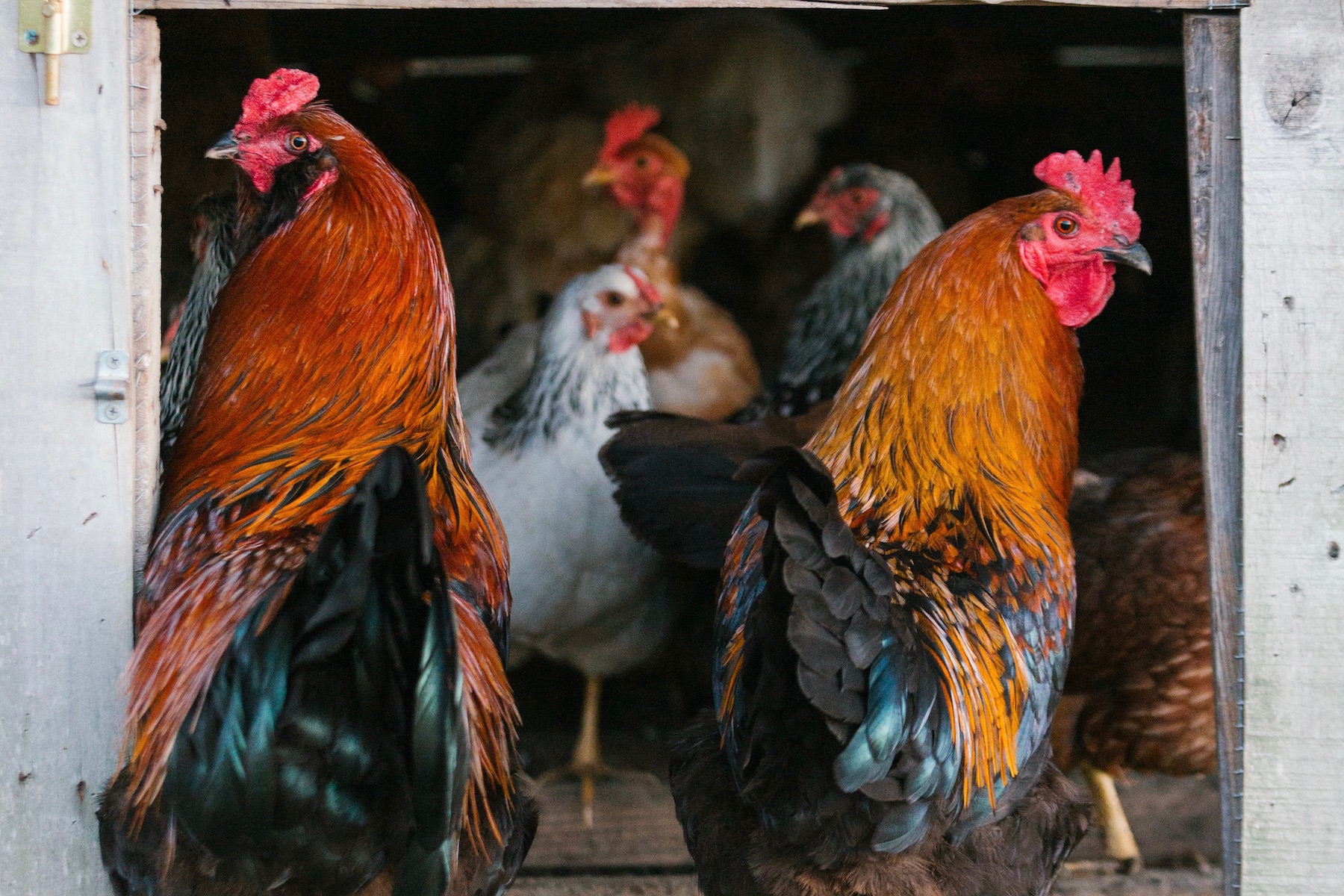
Many beginning flock keepers are surprised and dismayed when they discover that chickens peck each other while establishing their social hierarchy. Continuing our interview series with Gail Damerow, poultry expert and best-selling author, we ask her to explain the pecking order in chickens and how it works.
What is the pecking order in chickens?
The pecking order is the way chickens determine their position in the flock’s social hierarchy. It results in a stable social system and minimizes squabbles by establishing which individuals eat or drink first, which get the best roosting spots, and just about every other aspect of flock behavior.
Is it the same as bullying?
Absolutely not, even though chickens peck each other during both behaviors. Bullying involves one or more chickens aggressively picking on, pecking at, chasing, or outright fighting with other flock members. Bullying causes tension and stress in the flock, and can result in injury to timid or weaker flock members.
The pecking order, on the other hand, rarely results in serious injuries. It simply involves jostling to determine which chickens rank higher or lower in the social order. The very function of the pecking order is to reduce tension and stress among members of the flock.
How do chickens determine the pecking order?
It starts with baby chicks sparring with one another early on. By the time they reach about 6 weeks of age, they have determined their social ranks in relation to one another. If the chicks are all pullets (females), or all cockerels (males), the process is pretty straightforward as to who outranks who.
What happens in a mixed flock of pullets and cockerels?
In a flock that includes both pullets and cockerels, things get a bit more nuanced. The pecking order then ranks individuals on three levels — among all the males, among all the females, and between the males and the females.
Other considerations occur when chickens in a flock have differing ages and differing comb styles. Age usually outranks youth, and single-comb birds often outrank those with other comb styles.
…
blog.mcmurrayhatchery.com
Feed Name : Murray McMurray Hatchery Blog
Backyard Chickens,Education,Featured,Gail Damerow,Guest Articles
hashtags : #Pecking #Order #Chickens #Gail #Damerow






Leave A Comment