
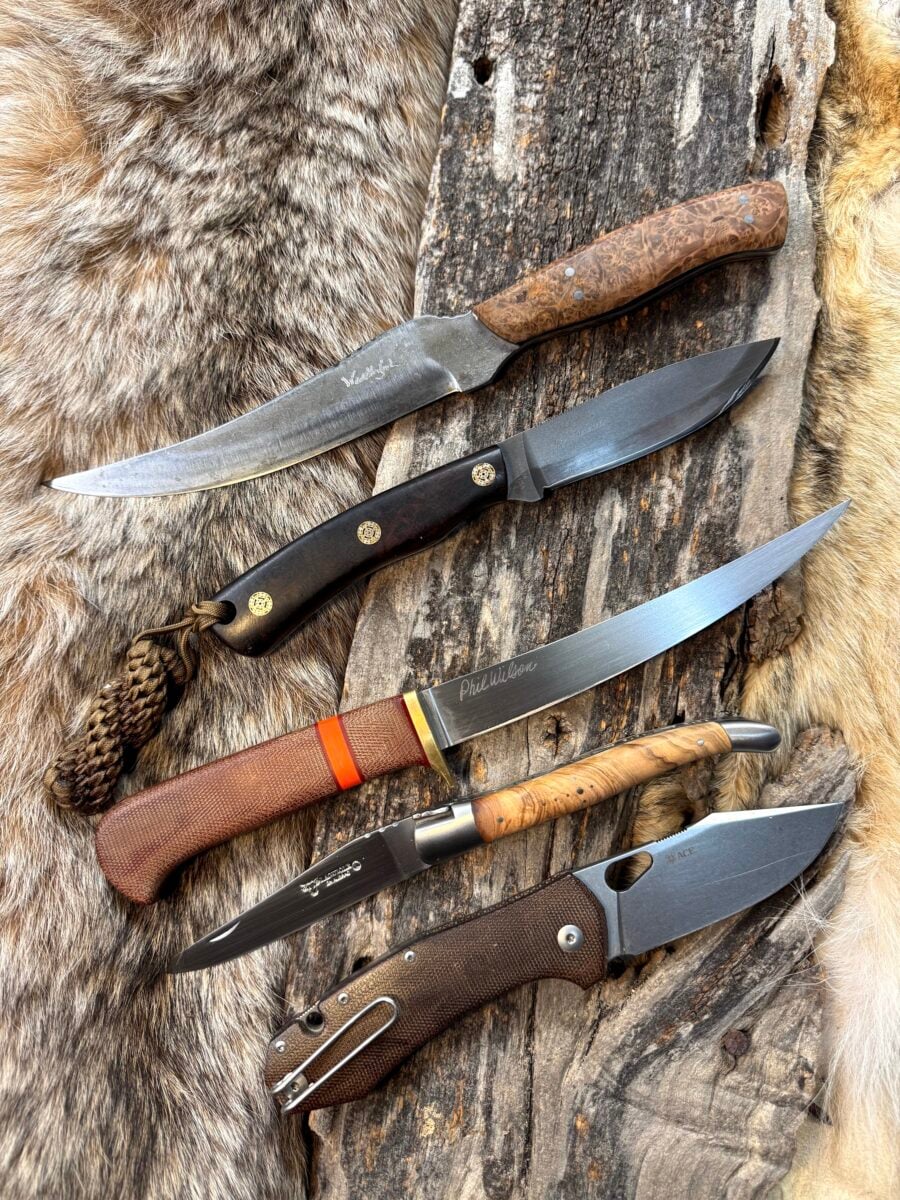
When I was a kid, my family had a Thanksgiving reunion every year in Gatlinburg, Tennessee, and I saved up my paper route money to blow on knives at the old Acorn knife shop smack in the middle of downtown. Bowie knives, neck knives, throwing knives, skinning knives—I was crazy about them all. Time and maturity have honed my sense of what sets a knife apart from others, but neither has diminished my obsession. Here are five favorites I have loved over a lifetime of hard knife use. I’ve loved them for various reasons—their beauty, craftsmanship, and efficacy, certainly. But a common thread runs throughout this list: A good story makes a great knife even better.
DiamondBlade Summit
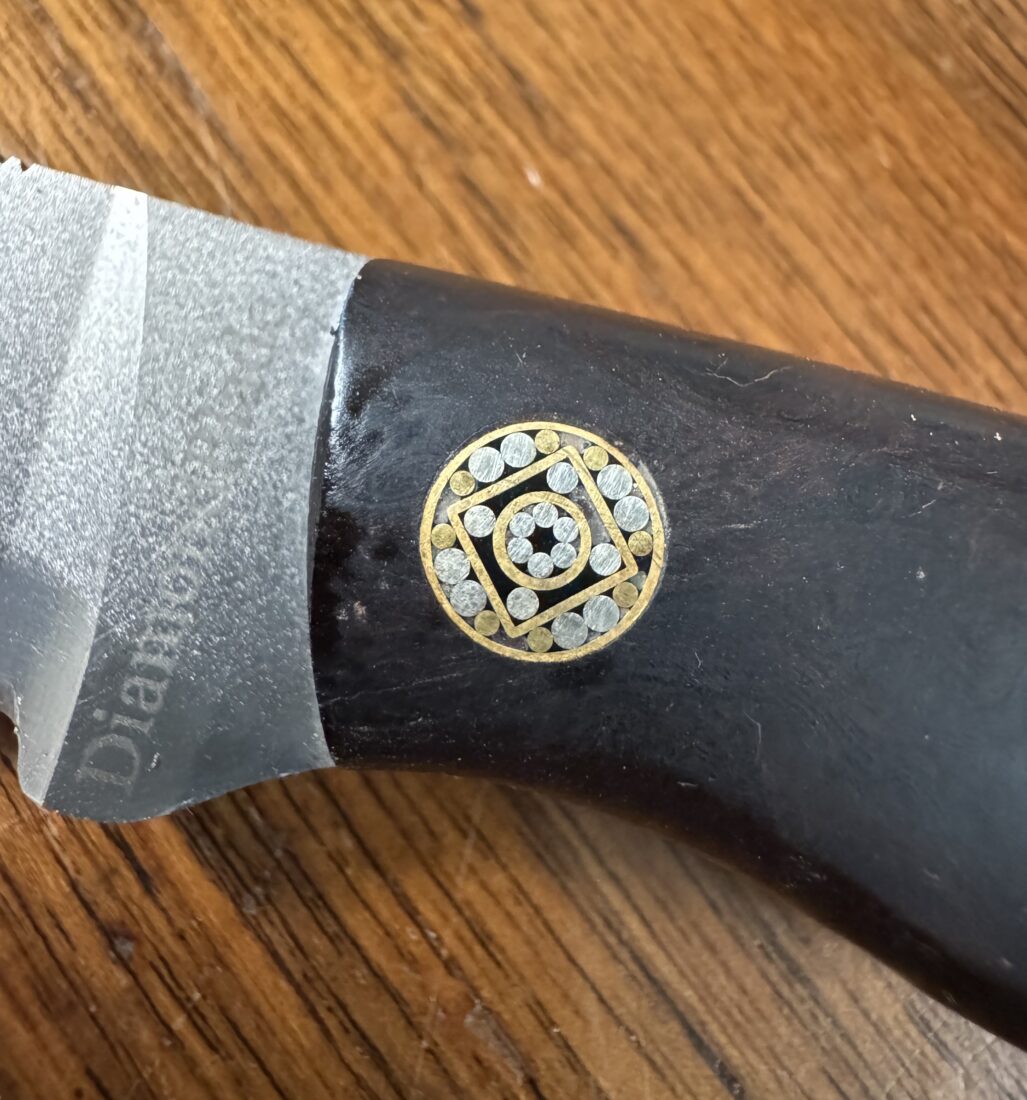
Photo: T. Edward Nickens
The DiamondBlade Summit’s mosaic pin design.
I have double love for this particular fixed-blade knife, a DiamondBlade Summit with ironwood handle scales and mosaic pin bolsters. DiamondBlade uses a proprietary “friction forging” methodology to produce tough blades that lap other manufacturers’ in sharpness. It then marries that steel with a palette of handsome handle materials and fetching details, none of which are obnoxious.
This knife is tops on my list because it was also a gift from David E. Petzal, the revered editor and knife nut who is in his fifty-fourth year on staff at Field & Stream. About ten years ago, Petzal sent me a box of his personal knives with a note saying that age and a long stretch of good, hard living had conspired to diminish his steadiness at the whetstone, and that he thought I would appreciate them. I was gobsmacked and literally moved to tears, and in the years since, I have used Dave’s knife to break down every creature I have killed larger than a bread loaf, from bear to deer to hogs to moose to jackrabbits. And I will use it thusly for the rest of my days.
Phil Wilson’s Punta Chivato Fillet Knife
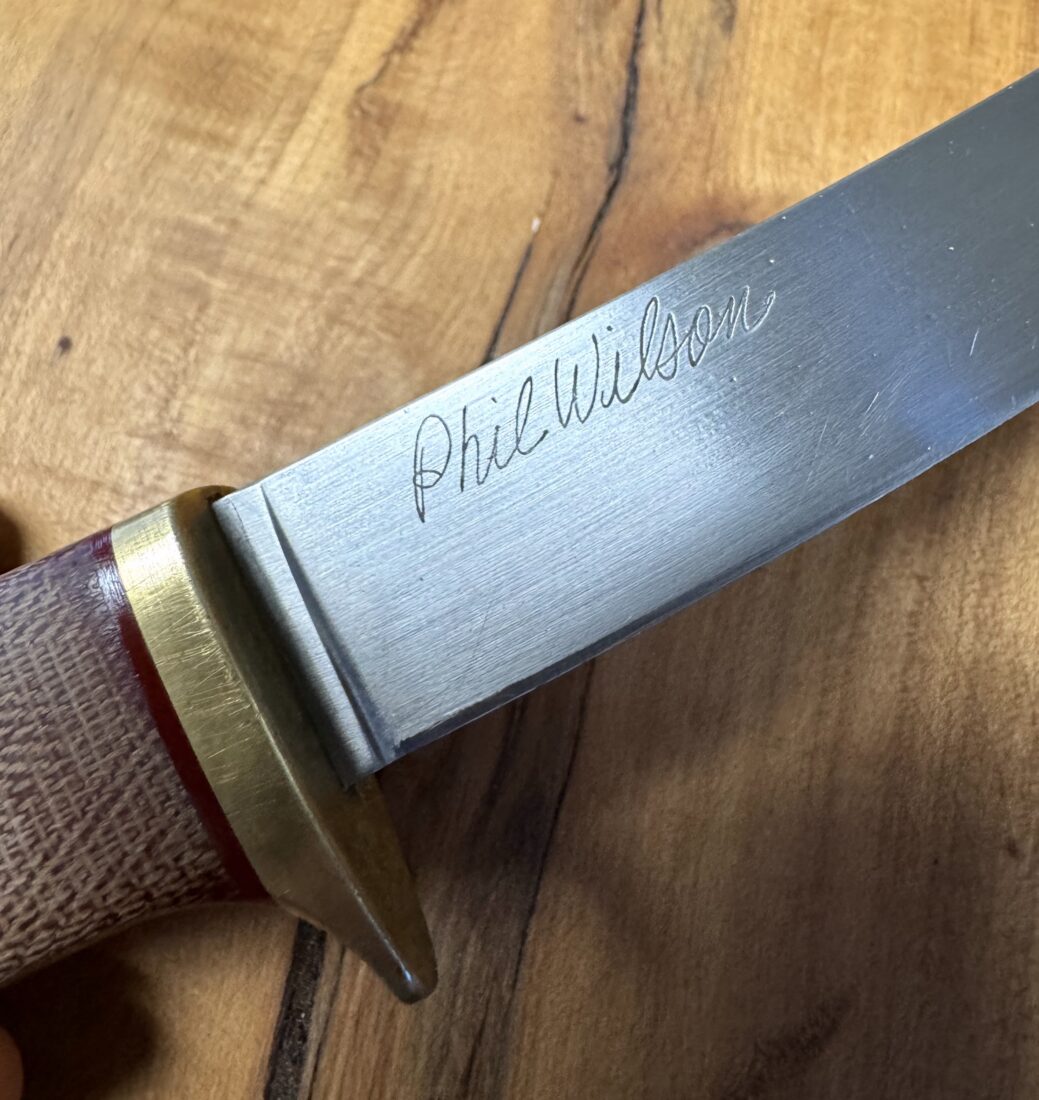
Photo: T. Edward Nickens
The Oregon knifemaker’s signature on the blade.
For two years in a row at the annual SHOT Show in Las Vegas, I salivated over the work of knifemaker Phil Wilson of Oregon. In that second year, he wandered over, said he remembered me and my wide-eyed gawking from the previous year, and started chatting. A few weeks later, this knife showed up in the mail: a fillet knife with a six-inch blade of CPM154 pelletized steel, springy and stiff, with micarta handle scales and a G10 spacer, because even a fillet knife deserves to look good. I didn’t order it and didn’t pay a penny for it, but I assure you, you probably couldn’t buy it from me. There are too many crappy fillet knives out there, made to be nearly disposable. This isn’t one of them. Wilson isn’t taking custom orders, but his knives surface on the secondary market from time to time. And Spyderco makes a few very nice Phil Wilson designs.
Weatherford Knife Company Western Skinner
I’ve watched South Carolina knifemaker Chad Weatherford’s career for years, and I love the fact that this eleven-inch semicustom knife is Southern born and bred. Like me, Chad grew up enamored of the seminal Old Timer Sharpfinger, and you can see that legendary blade’s influence in the Western Skinner’s sweep of belly and near needle-point-sharp tip. Crafted of 1095 tool steel, with a maple burl handle, it’s the first blade I reach for when butchering deer.
Laguiole Shepherd’s Knife
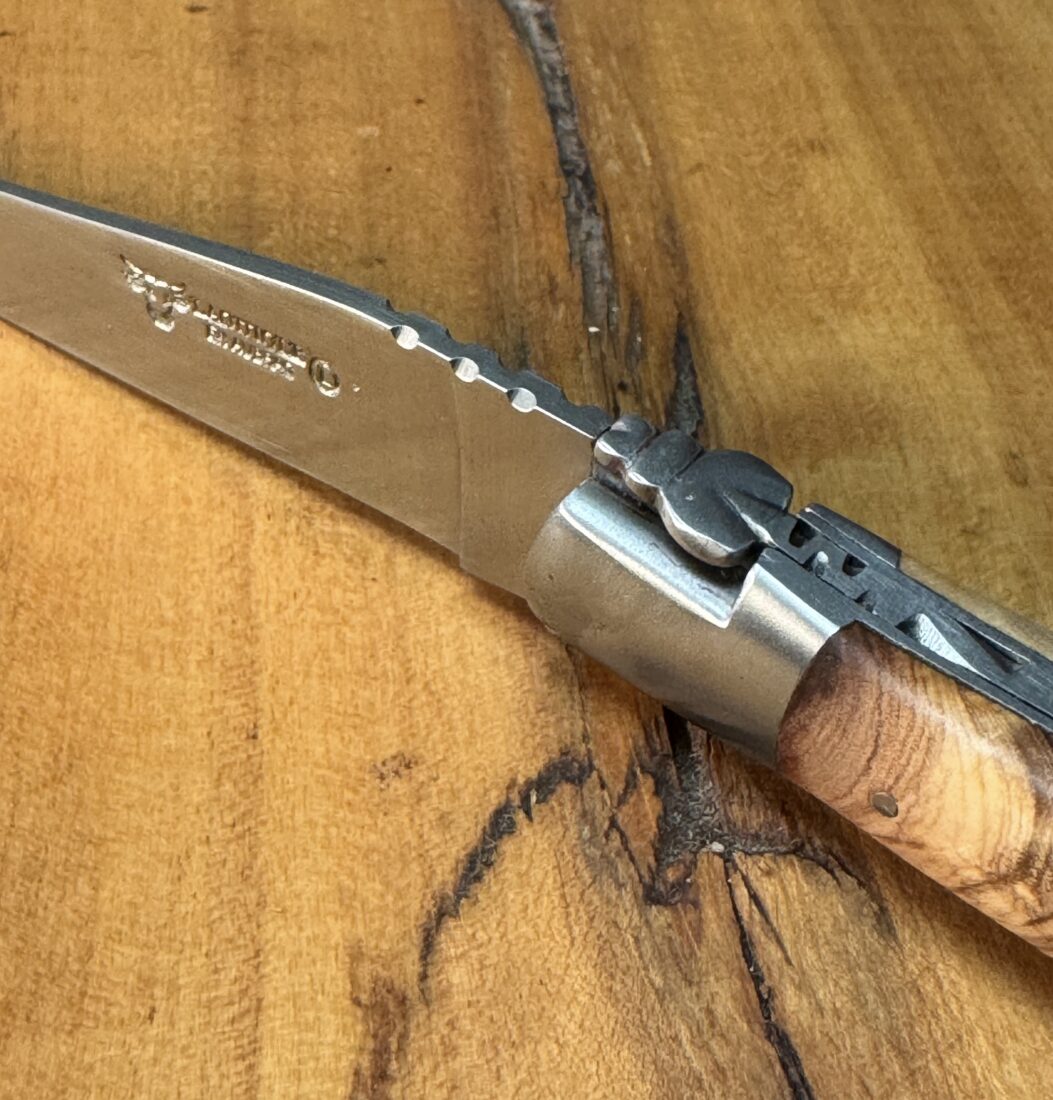
Photo: T. Edward Nickens
The knife’s carved insect detail.
The Laguiole knife is neither a brand nor a specific model, but a class of French knives revered for nearly two centuries. Made in the city of Thiers, in the tiny village of Laguiole, and in the mountains nearby, it’s a slender, svelte folding knife of supreme beauty. The backsprings are decoratively filed and capped with a distinctive carved bee or fly. Six to eight inlaid metal pins in the handle form a “shepherd’s cross” so that herdsmen could thrust the open knife into the ground or a loaf of bread and have prayers under the cross. The handles are typically cow horn or olive wood. Despite the ornamentation, these are working knives, and the spear point and slightly flexible blade will fillet out a duck or goose breast with surgical precision. Cheap knockoffs abound, so if heritage and authenticity matter, go for a knife from Laguiole en Aubrac.
GiantMouse Ace Grand
I like a sizeable blade, and even with an everyday carry folding knife, I tend to go a bit big. That might explain part of my love for the GiantMouse Ace Grand. The 3.3-inch blade of stonewashed Elmax has a pronounced swedge to produce a fine tip and folds into titanium liners and canvas micarta scales for a fighting weight of less than five ounces. GiantMouse was born in 2015 when a pair of Danish knifemakers went into cahoots with an American entrepreneur, which helps explain this knife’s sinuous beauty. Think Muhammad Ali, not Mike Tyson.
T. Edward Nickens is a contributing editor for Garden & Gun and cohost of The Wild South podcast. He’s also an editor at large for Field & Stream and a contributing editor for Ducks Unlimited. He splits time between Raleigh and Morehead City, North Carolina, with one wife, two dogs, a part-time cat, eleven fly rods, three canoes, two powerboats, and an indeterminate number of duck and goose decoys. Follow @enickens on Instagram.
…
https://gardenandgun.com/articles/best-sporting-knives/
gardenandgun.com
Feed Name : Garden & Gun
Sporting,The Sporting Life,The Wild South,Outdoors,sporting,What's New
hashtags : #Knives #Field #Seasoned #Sportsman #Garden #Gun








Leave A Comment