
Technology has come a long way since only being able to store 1.44 megabytes on a floppy disk! Yet, until serverless computing revolutionized the approach to resource capabilities, developers still had to think about how to maintain, scale, monitor, and the capacity of a server. If a developer needed to expand the limitations of the server they were on, it was not a simple upgrade. The server needed physical storage to upgrade and manual migration of content. EEEK! Think about the possibilities of data loss. No thank you!
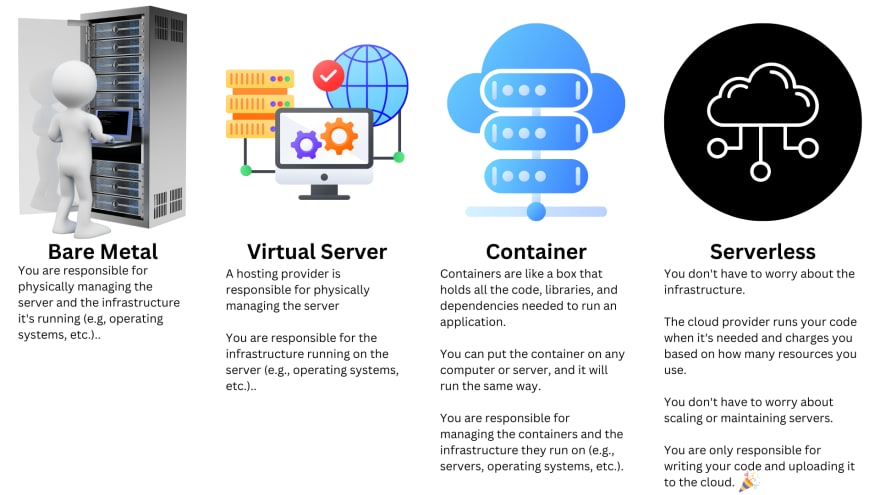
Now that we understand some of the struggles of traditional computing structures, we’ll dive into what makes serverless so revolutionary. Take a look at the graphic below. It’ll help with the visualization of how bare metal servers have evolved to serverless.
What is serverless computing?
“Overview. Serverless is a cloud-native development model that allows developers to build and run applications without having to manage…