
What Are the Best White Egg-Laying Chicken Breeds?
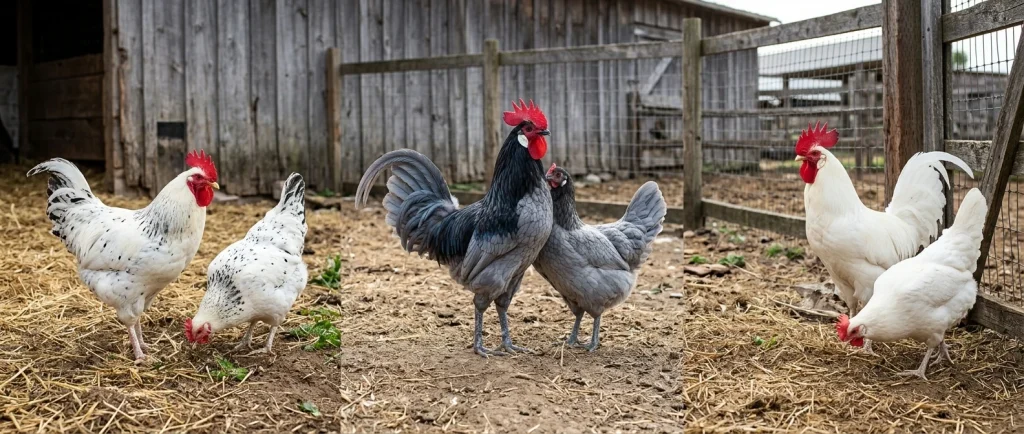
The best white egg layers are the White Leghorn, the Blue Andalusian, and the California White. White Leghorns are the top producers at up to 320 eggs a year but are flighty and noisy. California Whites lay nearly as well and are calmer, which suits smaller yards. Blue Andalusians lay a fair number of white eggs and are a threatened breed worth saving.
When I was a kid, you couldn’t really find brown eggs in the grocery store. White egg laying breeds ruled the roost. Those were the days of white bread, white eggs, sugary drinks galore, and leaded gasoline. A lot has changed since then, thank goodness. We’ve learned that whole foods are better for you, sugar is the enemy, and lead is poison. So what about the white eggs?
Table of Contents
Are White Eggs Good for You?
Yes. According to the U.S. Department of Agriculture, shell color doesn’t affect an egg’s nutrient content, and there’s no nutritional difference between a white egg and a brown one. The breed of the hen determines the color.
In this article we’ll look at some white egg laying breeds, so you can get familiar with the birds that will liven up your egg cartons and give you a blank slate for Easter egg coloring.
White Leghorns, Queens of the White Egg Laying Kingdom

When you picture mass production egg laying, you’re probably imagining thousands of white chickens in cages with their heads poking out between the wire bars. Those would be White Leghorns.
White Leghorns are prolific layers, up to 320 eggs per year. That statistic comes from the internet, but I can vouch for it personally. I’ve had several of these amazing birds, and they’re extremely reliable when it comes to making eggs.
Here’s what they’re like. They’re great layers, as I’ve said, and very reliable. They’re flighty, so they’ll happily run from you when you try to corral them into the coop or pen, and they’ll gladly roost outside whether you like it or not. They’re good foragers with a great forage to egg ratio. And they’re not broody, so you’ll need an incubator if you want to raise your own.
White Leghorns are not the friendliest chickens. They prefer to stay aloof and just do a wonderful job of laying eggs. As pets, they’re fun to watch from a distance. If you want a pet chicken, go get yourself a Silkie or two.
They’re also nervous, flighty, noisy birds, and not good at all for urban flocks. I guess they’d be okay if you don’t like your neighbors.
Just a Little History
I won’t get too deep into this. That’s what Wikipedia is for.
White Leghorns first came to the United States in 1828 and probably landed in Massachusetts. They came from the Tuscany region of Italy. From the U.S. they found their way to Britain in 1870. The birds were known as layers then and they certainly still are today.
Blue Andalusian

The Andalusian, or Blue Andalusian, is a sleek, hardy, slate colored chicken that lays a fair number of medium to large white eggs. It’s not the layer the White Leghorn is, but it’s not far behind, averaging about 180 eggs a year. That’s an egg every other day at least.
What sets this chicken apart is that it’s a threatened breed. If you’re up for it, breeding these lovely birds is a great way to help bring them back to healthy numbers, and you’d be in good company with The Livestock Conservancy.
The next bit on coloration is from the Conservancy. It’s not word for word, but the information is accurate. You get blue birds by crossing a black Andalusian with a white one. When two Blue Andalusians mate, about a quarter of the chicks will have black plumage, half will be blue, and the remaining quarter will be white or splash, which is white with blue or black splashes. The blue ground color should extend all the way down to the fluff. For the best colored Blue Andalusian pullets, breed a dark blue male to a properly colored hen. For the best colored males, both parents should be slightly dark.
Like the Leghorns, this bird is flighty and hard to catch if you’re trying to force it into a confined area, and it will roost outside if allowed. It doesn’t like to be cuddled, so if you want a pet, don’t count on this one.
Blue Andalusians are at their best free ranging, where they’ll cover a large territory. They aren’t fans of confinement and can turn aggressive if they don’t get enough room to move. They’re great foragers with a good production to feed ratio.
A Little History
The Blue Andalusian got its name from the place of its origin which is the Andalusia region in southern Spain. It went to England in the mid-1840s and found its way to North America in the mid to late 1850s. It was recognized by the American Poultry Association in 1874.
California White

California White chickens are excellent egg layers, producing up to 300 eggs per year and starting to lay at around five to six months of age. If that sounds familiar, it’s because they’re a cross of White Leghorns and California Greys.
As the name says, they have white feathers, though some have black spots because the California Grey lineage includes some Barred Rock genetics. They have yellow legs and a single red comb.
California Whites are slightly larger than White Leghorns, and some of their traits suit people raising chickens in an urban area. They’re not as noisy as their Leghorn cousins, or quite as flighty. What they’re good at is laying eggs and foraging. They’re not the greatest pets, but they’re relatively calm and do well in more confined spaces.
A Little History
These beauties were developed in the U.S. in the mid 1900s. They started out as a multipurpose chicken, but their use as broilers has dwindled as meatier, faster growing birds have taken their place.
uties were developed in the U.S. in the mid-1900s. Originally used as a multipurpose chicken, its broiler use has dwindled as meatier, faster-growing birds have taken its place.
Wrapping it Up
Forty years ago, you’d have been hard pressed to find a brown, blue, or green egg in the grocery store. The past 20 years have seen a big increase in colored eggs, thanks to the recognition that all eggs are created equal. Some people think colored eggs are healthier than white ones, but that simply isn’t true, so don’t be afraid to add a few white egg layers to your flock.
FAQ
Are white eggs less nutritious than brown eggs?
No. Shell color doesn’t change an egg’s nutrient content. The hen’s breed determines the color.
What’s the best white egg laying breed?
The White Leghorn, at up to 320 eggs per year. They’re very reliable, but they’re also flighty and noisy.
Which white egg layer is best for a small or urban yard?
The California White. It’s not as noisy or flighty as the Leghorn and does well in more confined spaces.
Is the Blue Andalusian a good layer?
It’s a fair one, averaging about 180 white eggs a year, and it’s a threatened breed, so raising them also helps conservation.
Thanks for reading. Please leave a comment below if you’d like to, or just say hello.
Dave

Chickenmethod.com
…
chickenmethod.com
Feed Name : Chicken Method
Breeds
hashtags : #White #EggLaying #Chicken #Breeds










Leave A Comment